One moment your dog is trotting across the kitchen, and the next they’re stumbling into the wall, head tilted sideways, eyes darting back and forth like they’re watching a very fast tennis match. It’s one of the most alarming things a pet owner can witness, and the immediate thought is often the worst-case scenario. The good news is that in many cases, vestibular episodes are far less serious than they look, and pets can bounce back surprisingly quickly with the right care.
Cupertino Animal Hospital is a privately owned practice in Cupertino, CA, with a specialty ear care center and advanced diagnostics, including CT scanning, to evaluate vestibular presentations thoroughly. Our pet ear care center brings specialized otology expertise that makes a real difference when your pet has vestibular symptoms. If your pet develops sudden balance or coordination changes, reach out to us promptly so we can get the right evaluation started.
My Pet Can’t Walk Straight: What Is Vestibular Disease?
Understanding Your Pet’s Internal Balance System
Think of the vestibular system as your pet’s internal GPS. It connects the inner ear to the brainstem and cerebellum, and when any part of that connection is disrupted, the result is a sudden and dramatic loss of equilibrium that can look absolutely terrifying to watch.
The telltale signs include:
- A pronounced head tilt, staggering or falling when trying to walk
- Circling in one direction
- Nystagmus, the rapid involuntary eye movements (usually side-to-side or rotational) that owners find the most alarming part of the whole picture.
- Nausea and vomiting often tag along because the brain is getting contradictory signals about where the body actually is in space.
Most affected pets stay alert and aware throughout, which is actually a helpful clue that something other than a brain emergency may be going on. The location of the problem matters a lot for what happens next.
- Peripheral vestibular disease originates in the inner ear or the vestibular nerve, and it generally carries a better prognosis.
- Central vestibular disease, which originates in the brainstem or cerebellum, produces additional signs that point toward brain involvement and requires more intensive investigation.
Vestibular disease in dogs, particularly the idiopathic form that affects older dogs with no identifiable underlying cause, often begins improving meaningfully within 72 hours with supportive care alone. Vestibular disease in cats is less common but looks similar, and affected cats may refuse food during the acute phase because everything feels like it’s spinning.
At Cupertino Animal Hospital, a thorough neurological exam is the starting point for every pet presenting with vestibular signs, and our diagnostic capabilities, including CT scanning and in-house lab testing, allow that evaluation to happen efficiently and without unnecessary delays.
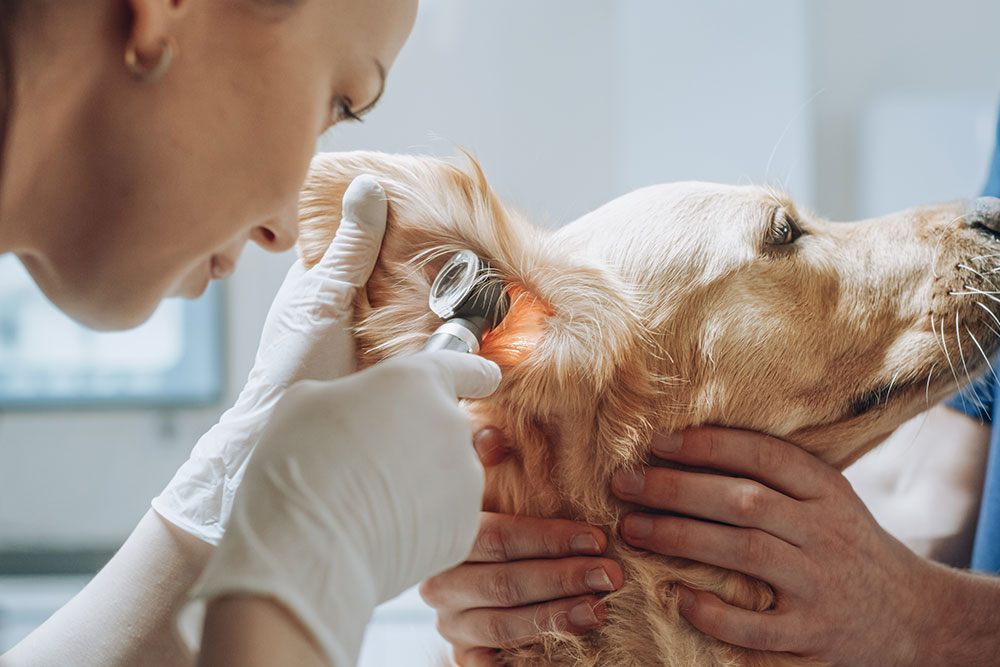
Could an Ear Infection Be the Cause?
When Infections Progress from Outer to Inner Ear
Ear infections are among the most treatable causes of head tilt and balance disruption, which is exactly why identifying them early matters so much. An infection confined to the outer ear canal, known as otitis externa, causes discomfort and discharge but doesn’t typically affect balance. When infection progresses inward to involve the middle or inner ear, the situation changes.
- Otitis media and interna can directly disrupt the vestibular apparatus and produce the full range of balance symptoms, alongside signs of ear pain like reluctance to chew, sensitivity around the jaw or ear, and sometimes a subtle facial droop on the affected side. What looks like a sudden neurological crisis can, in some cases, trace back to an ear infection that had been quietly progressing.
- In cats, nasopharyngeal polyps are a notable cause of middle ear disease. These benign tissue growths can block normal drainage, creating the right conditions for infection and inflammation that then disrupts balance. Cats with these polyps often have a history of chronic upper respiratory symptoms or ear discharge before more significant vestibular changes show up.
Foxtails and Ear Canal Foreign Bodies
California pet owners have good reason to know about foxtails, the seed heads of wild barley and other grasses that are everywhere in the Bay Area from late spring through fall. Foxtails are designed to travel in one direction only, and once one gets lodged in an ear canal, those backward-pointing barbs make it impossible for them to work back out on their own. A pet with a foxtail in the ear usually presents with sudden intense head shaking, pawing at the ear, and obvious pain when the ear is touched. Left in place, foxtails cause progressive irritation, infection, and potentially a ruptured eardrum. Removal requires sedation or anesthesia and specialized equipment, and it’s something our ear care team handles regularly.
The pet ear care center at Cupertino Animal Hospital is specifically equipped for complicated ear cases. Using endoscopy and video otoscopy, we can visualize the ear canal and eardrum at a level of detail that standard examination simply can’t match.
What Happens When the Problem Is in the Brain?
Brain Tumors, Brain Inflammation, and Strokes
When vestibular signs originate in the brain itself rather than the inner ear, there are usually additional clues: generalized weakness rather than just leaning to one side, difficulty placing paws correctly when walking, changes in awareness or behavior, and signs involving multiple parts of the nervous system at once.
- Brain tumors in dogs are more common in older animals and certain breeds, including Golden Retrievers, Boxers, and Boston Terriers. In cats, meningiomas are the most frequently diagnosed brain tumor and can also occur in dogs. When a mass sits near the brainstem or cerebellum, vestibular signs may actually be the first sign before other neurological changes develop.
- Strokes in pets occur when blood flow to part of the brain is blocked (ischemic stroke) or when bleeding occurs within brain tissue (hemorrhagic stroke). Unlike the arterial disease that drives most strokes in people, pets are more likely to develop vascular events secondary to underlying conditions like kidney disease, high blood pressure, Cushing’s disease, clotting disorders, or heart disease.
- Meningitis and encephalitis involve inflammation of the membranes around the brain or the brain tissue itself, from infectious causes like bacteria, viruses, fungi, or parasites, or from immune-mediated inflammation with no identifiable organism. Signs typically go beyond vestibular changes to include fever, neck pain or stiffness, behavioral shifts, and seizures.
Confirming brain involvement includes bloodwork, blood pressure measurement, cerebrospinal fluid analysis, and advanced imaging like CT or MRI. What happens next depends on the individual pet’s overall health, as well as what the family’s goals are. Surgery, radiation, and oral medications are all used in various combinations, and compassionate palliative care focused on quality of life is equally valid and supported.
How Do Veterinarians Diagnose Vestibular Disease?
A thorough history is the foundation of a useful vestibular workup: when signs started, whether onset was sudden or gradual, current medications, recent illnesses or injuries, and any previous episodes. This narrows the possibilities considerably before the physical exam even begins.
A complete neurological and physical exam follows, evaluating cranial nerve function, gait, coordination, and how the pet places its paws when walked. The exam helps distinguish peripheral from central disease based on the pattern of signs. A pet with peripheral vestibular disease typically tilts and falls to one side but maintains normal strength, while a pet with central involvement is more likely to show weakness, abnormal paw placement, or changes in multiple areas at once.
From there, diagnostics are tailored to what the exam suggests:
- Otoscopic exam and cytology for any case where ear disease is a possibility
- In-house bloodwork to check for systemic conditions including thyroid hormone, kidney function, and inflammatory markers
- Blood pressure measurement, particularly for older cats and any patient where stroke or hypertension is a concern
- CT or advanced imaging for cases with central signs, incomplete response to initial treatment, or when a definitive diagnosis is needed
Treatment: Matching the Approach to the Diagnosis
Treatment for vestibular signs is as varied as the causes behind them. For idiopathic vestibular disease, the main approach is supportive care: anti-nausea medication, a safe padded space to prevent injury from falls, and time. Many dogs show real improvement within three days. A mild head tilt may stick around permanently, but it doesn’t affect quality of life in any meaningful way, and most dogs adapt quickly and completely.
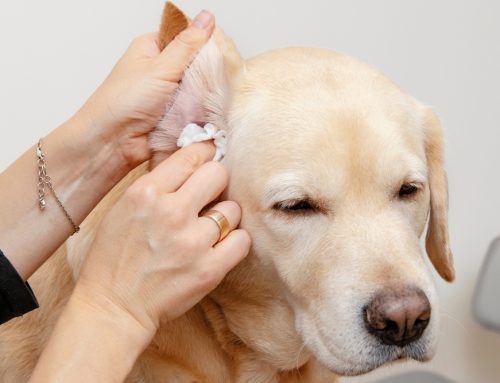
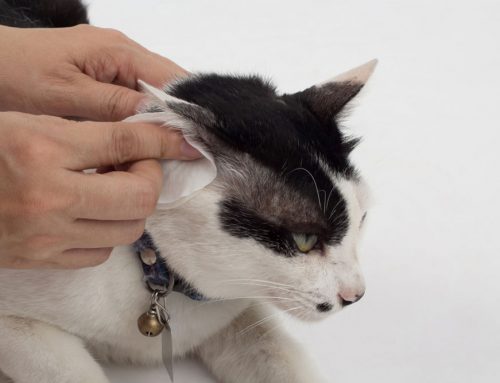
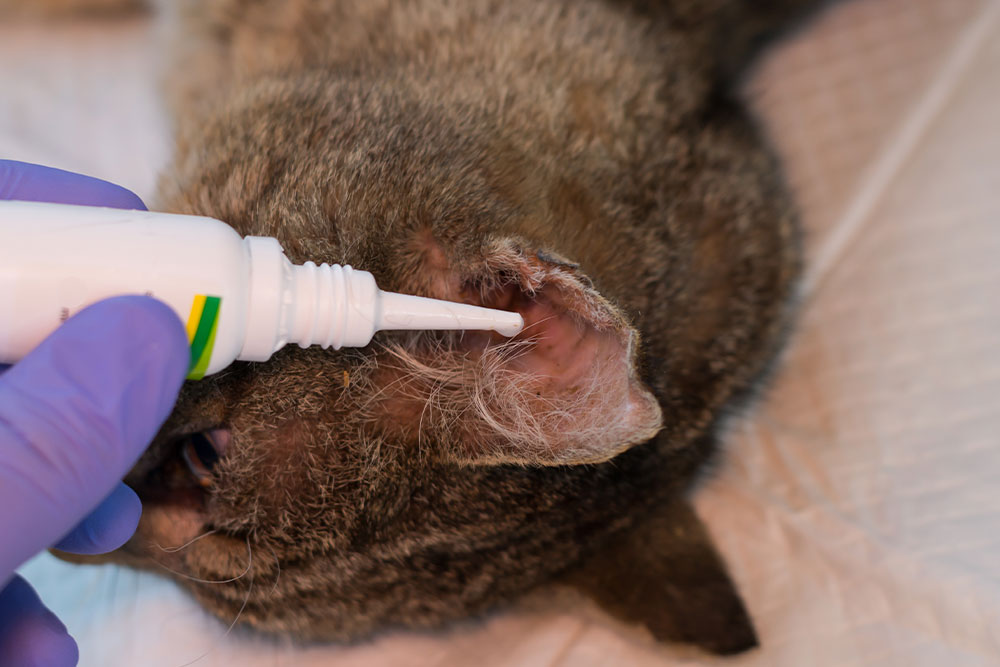
For ear infections, treatment involves appropriate antimicrobial or antifungal therapy, anti-inflammatory medication, and consistent ear cleaning and rechecks. Complicated cases may need ear flushing under anesthesia or endoscopic evaluation. The ear treatments provided through our Pet Ear Care Center are tailored to the specific infection rather than a one-size-fits-all approach.
For metabolic conditions, medication and dietary adjustments address the underlying cause while supportive care manages acute symptoms. For brain disease, treatment options depend on the diagnosis and the family’s goals, with the full range of active intervention and compassionate palliative care both available and fully supported.
FAQ: Vestibular Disease in Dogs and Cats
Is my pet having a stroke?
Possibly, but statistically much less likely than you might think. Idiopathic vestibular disease and inner ear infections are significantly more common causes of sudden vestibular signs than strokes in companion animals. That said, strokes do happen and are part of the workup when the presentation warrants a closer look.
Can ear infections really cause a head tilt?
Yes, when the infection involves the middle or inner ear rather than just the outer canal. The vestibular apparatus lives in the inner ear, and infection in that area directly disrupts balance. This is also why ear infections that don’t resolve with standard treatment deserve deeper investigation rather than repeated rounds of the same medication. Contact us if your pet has chronic or recurring ear problems and we’ll take a closer look at what’s actually going on.
Getting to the Right Answer Matters
Sudden balance loss in a pet is frightening, and the fear that something serious is happening is completely understandable. What helps most in that moment is a prompt evaluation by a team equipped to work through all the possible causes accurately, and with a warm approach that takes both you and your pet’s comfort seriously.
Cupertino Animal Hospital brings specialized ear care expertise, advanced diagnostics, and genuine dedication to these cases. Whether the cause is something that resolves quickly with supportive care or something that needs longer-term management, our team is committed to giving you clear answers and a plan you can feel confident about. Schedule an evaluation or contact us at (408) 252-6380 any time your pet shows sudden changes in balance, coordination, or head position.