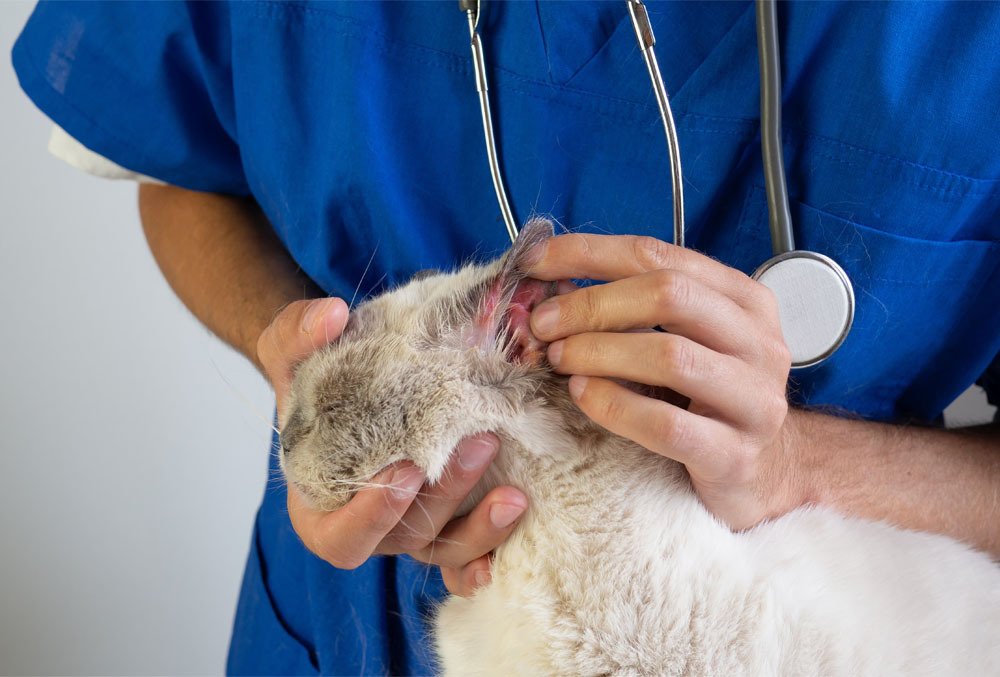
Not every ear issue announces itself. Dogs with long, pendulous ears, heavy coat around the ear canal, or a history of allergies may have chronic low-grade ear disease that looks and smells subtly off without ever producing the dramatic scratching and head-shaking that prompts an immediate vet visit. Learning to perform a basic ear inspection at home, and knowing what is within the range of normal versus what warrants a call, is one of the more practical skills you can develop.
Cupertino Animal Hospital has built a particular focus on ear health under Dr. Munir Kureshi’s leadership, with advanced video otoscopy and CT imaging that allow detailed evaluation beyond what is possible with a basic scope exam. Our wellness exams incorporate ear assessment at every visit. For dogs and cats with recurring ear problems or treatment-resistant infections, our level of expertise sets us apart. Contact us to have your pet’s ears thoroughly evaluated.
Essential Information
- Most healthy pets do well with cleaning every 2 to 4 weeks at most; some need more, but many need less; over-cleaning strips the protective wax layer and creates problems instead of preventing them.
- Some signs that look minor (subtle odor, slightly waxy buildup, mild head shaking) can indicate early infection or chronic low-grade ear disease that benefits from prompt evaluation rather than at-home cleaning.
- Active infection signs, pain on touch, bleeding, head tilt, or balance issues mean no home cleaning; cleaning in these situations can push infection deeper or rupture an already compromised eardrum.
- Recurrent ear infections almost always have an underlying cause (anatomy, endocrine disease, foreign material) that ear medication alone cannot fix; treating root causes is what breaks the cycle.
Why Do Routine Ear Checks Matter?
Routine ear checks are low-stress and easy to incorporate into regular pet care, especially when they become part of a predictable routine. Most pets tolerate gentle ear inspections at home if introduced calmly and rewarded consistently. The goal is not a clinical exam; it is a brief look that catches changes early.
Building tolerance through cooperative care techniques pays off in two ways. Your pet becomes comfortable having ears handled at home, which makes professional exams less stressful, and you develop a baseline understanding of what your specific pet’s healthy ears look and smell like. That baseline matters: subtle changes are much easier to notice when you have been looking regularly than when you are trying to remember what the ears looked like a few months ago.
Make ear checks part of normal handling. After a walk, before a meal, during evening cuddle time. A quick lift of the ear flap, a glance, a sniff, and you are done. If everything looks normal, no further action is needed. Our team teaches you what healthy ears look like at every wellness visit, so you walk away with a clear sense of what to watch for. You can also check out our YouTube channel for videos of what an ear issue looks like, and what normal ears look like, to help you know what’s normal for your pet.
Why Are Some Pets More Vulnerable to Ear Problems?
Dog and cat ear canals have an L-shape that is very different from the relatively straight canal in humans. The vertical portion descends from the opening, then makes a 90-degree turn into a horizontal portion that ends at the eardrum. This design provides protection from foreign material and trauma, but it also creates a warm, dark, often slightly moist environment where bacteria and yeast can thrive when the natural balance is disrupted.
Certain pets are at higher baseline risk for ear problems:
- Floppy-eared breeds (Cocker Spaniels, Basset Hounds, Labs, Goldens): reduced airflow into the canal
- Breeds with hair inside the canal (Poodles, Schnauzers, Maltese): trap moisture and debris
- Narrow-canal breeds (Shar-Peis, English Bulldogs): retain wax and discharge
- Dogs with endocrine disorders: diseases like hypothyroidism or Cushing’s disease disrupt healthy skin
- Frequent swimmers of any breed: elevated risk from water exposure
- Cats: less commonly affected overall, but can develop ear mites, polyps, or other ear disease
Knowing your pet’s anatomical and lifestyle risk factors shapes how often they need attention. Our team tailors ear care recommendations to your individual pet’s needs at every visit.
What Signs Warrant Veterinary Attention for Ear Problems?
Some signs are subtle; others are loud. Either way, they deserve a closer look:
- Frequent head shaking or tilting, especially toward one side
- Scratching or pawing at the ears repeatedly
- Redness, swelling, or warmth of the ear flap or canal
- Discharge that is brown, yellow, green, or bloody
- Strong or sour odor from the ear
- Yelping or pulling away when ears are touched
- Rubbing ears along furniture or carpet
- Crusty buildup along the inner ear flap
- Changes in behavior like irritability, decreased appetite, or hiding
When these signs appear, visits to our Ear Care Center include thorough evaluation and targeted therapy to address the cause rather than just the symptoms.
How Often Should You Inspect and Clean Your Pet’s Ears?
There is a real balance between staying on top of ear health and over-doing it. Frequency depends on individual risk factors, lifestyle, and what your pet’s ears actually look like during routine checks.
Weekly Inspections, Customized Cleaning Schedules
All pets benefit from a brief weekly ear check to look for changes in color, odor, moisture, or debris. The check itself takes seconds: lift the ear flap, look, smell. If everything looks normal (light pink skin, light wax or none, no odor), there is no need to clean unless we have specifically instructed otherwise.
Cleaning frequency varies dramatically by individual. Most healthy pets do well with cleaning every 2 to 4 weeks at most, and many need less. Pets who swim regularly may need cleaning after every water exposure to prevent moisture-related issues. Pets with endocrine issues, ear polyps, or narrow canals may also need more frequent cleaning.
The most common mistake is over-cleaning or using products that aren’t appropriate for ear canals, like certain “home remedies”. Disrupting the protective wax layer too frequently leaves the canal more vulnerable to infection, not less. Our team builds personalized cleaning schedules during your pet’s regular visits based on history, lifestyle, anatomy, and what we are seeing in the ears. We can make recommendations for the best ear cleaner for your pet based on their risks.
When Should You NOT Clean Your Pet’s Ears at Home?
When not to clean ears is as important as when to clean them. Skip home cleaning and call us if any of the following are present:
- Active infection signs: swelling, warmth, redness, or smelly discharge
- Significant pain or sensitivity when ears are touched
- Bleeding or visible crusting in or around the ear
- Sudden behavior changes like disorientation, loss of balance, or persistent head tilt
Cleaning in any of these scenarios can push infection deeper, cause chemical injury to inflamed tissue, or rupture an already compromised eardrum. Otitis externa (outer ear infection) and otitis media and interna (middle and inner ear infections) need diagnosis and targeted treatment, not at-home cleaning. Request an appointment for evaluation without delay if any of these signs are present.
What Is the Safe and Gentle Ear Cleaning Technique?
When we have recommended cleaning, the technique matters as much as the product. The basics of cleaning your dog’s ears safely:
- Set up in a calm space with treats and a towel. Make this positive, not stressful.
- Lift the ear flap to expose the canal opening.
- Squirt veterinary-approved cleaner directly into the canal until you can see fluid pooling at the opening.
- Massage the base of the ear for 20 to 30 seconds. You should hear a squelching sound, which means the cleaner is breaking up debris.
- Step back and let your pet shake their head. This brings debris up out of the canal. Expect a mess.
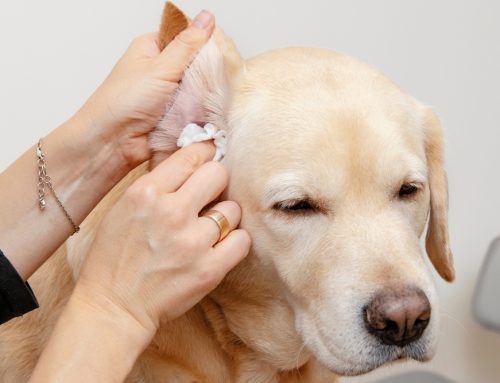
- Wipe only the visible portions of the ear with a soft cotton ball or gauze. Never insert anything into the canal.
- Reward generously afterward. Build positive associations.
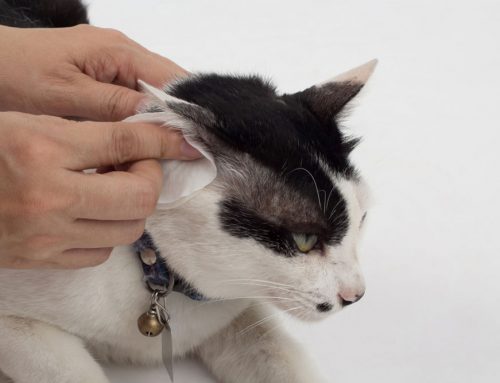
Cleaning your cat’s ears follows similar principles but with smaller volumes, gentler handling, and less frequent need. Cats rarely require routine cleaning, and forcing cleaning on a healthy cat almost always creates more problems than it solves.
Stop immediately if your pet shows pain, panic, or strong resistance. Do not push through. The goal is a positive routine, not a wrestling match. Our team is happy to demonstrate proper technique during a wellness exam or a dedicated ear care consultation.
Why Aren’t All Ear Cleaners Safe or Effective?
Choosing the right cleaner matters as much as the cleaning itself. The two sides of the issue are what to avoid in over-the-counter products and how to identify safe, veterinary-approved alternatives.
Problems With Over-the-Counter Cleaners
Some commercially available ear cleaners contain ingredients that range from ineffective to actively harmful:
- Alcohol: stings inflamed tissue and dries out the canal lining
- Hydrogen peroxide: damages healthy tissue
- Vinegar-based cleaners: sting and can worsen inflamed canals
- Essential oils (tea tree, eucalyptus, others): can be toxic to pets, especially cats
- Human ear products: formulated for human ears and not appropriate for veterinary use
Many natural-labeled products marketed for pets contain problematic ingredients despite friendly packaging. Over-the-counter ear mite treatments can be especially problematic. Many well-intentioned pet owners see discharge in their pets ear and automatically assume ear mites, when it’s actually almost always a bacterial or yeast infection. Ear mites are quite rare in dogs especially. With a ruptured eardrum, unsafe cleaners and treatments can cause permanent damage or deafness. The right cleaner depends on what is happening in the ear.
Choosing Safe, Veterinary-Approved Ear Cleaners
Safe cleaners are pH-balanced for pet ear chemistry and include gentle surfactants or drying agents that remove debris without causing irritation. Some include antifungal or antibacterial properties for use during active treatment. Choosing the right one depends on whether your pet has an active infection, sensitive skin, or simply needs maintenance cleaning.
Ear cytology helps us pick the right product. Looking at ear debris under a microscope tells us whether yeast, bacteria, or both are involved, which then shapes treatment recommendations. Our pharmacy carries veterinary-approved ear cleaners appropriate for various situations. We can recommend the specific product that fits your pet’s needs.
How Do You Manage Water Exposure and Moisture in Ears?
Moisture trapped in the L-shaped canal creates ideal conditions for bacterial and yeast overgrowth. Prevention strategies for water-loving dogs:
- Towel-dry the outer ear thoroughly after every swim, bath, or rain exposure. The visible portion of the ear flap and the canal opening get wiped, not the deeper canal.
- Use a veterinary-approved drying solution if your dog swims frequently. These include drying agents that help moisture evaporate and slightly acidify the canal to discourage microbial growth.
- Allow the canal to air out between swims when possible. Frequent swims followed by towel-drying still leave residual moisture.
- Keep hair around the ears trimmed short to limit how much water is trapped in fur
- Consider protective gear for serious water dogs. Ear-covering products are available for dogs who swim or surf regularly.
When removing water from ears, the gentlest method is allowing the dog to shake naturally combined with outer ear drying. Do not insert anything into the canal to get water out.
Why Are Professional Ear Examinations Essential?
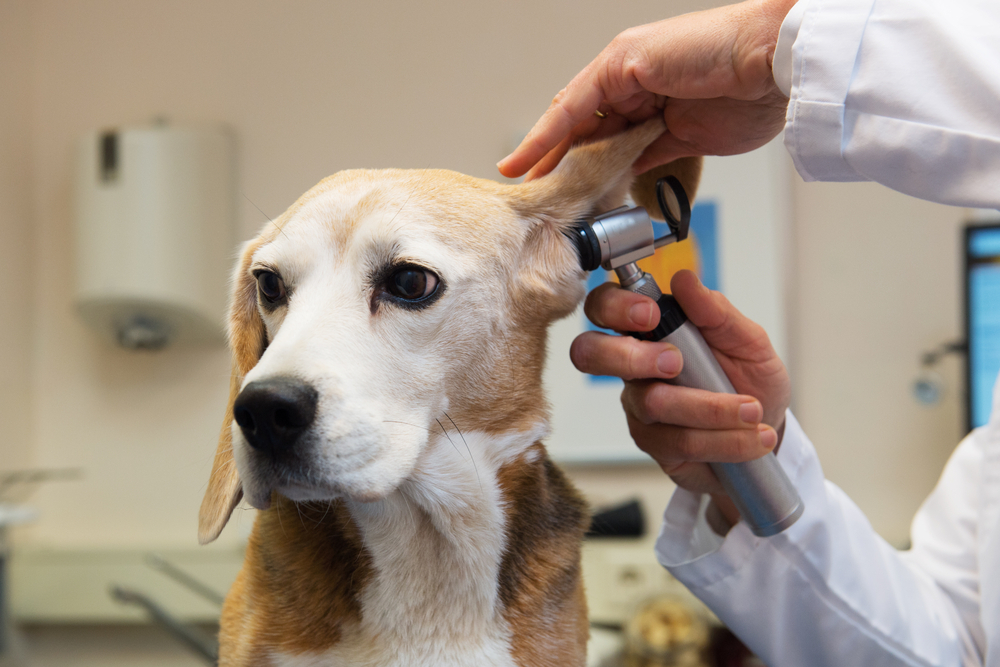
Even with thorough home checks, professional exams catch what home inspection cannot. A complete veterinary ear evaluation includes:
- Otoscopic visualization deep into the canal to the eardrum
- Eardrum assessment for integrity, color, and any masses behind it
- Cytology of any discharge to identify infectious organisms
- Culture and sensitivity for resistant infections
- Video otoscopy for chronic or atypical cases, allowing precise documentation and guided sampling
- Imaging (CT or MRI) for cases involving suspected middle or inner ear involvement, polyps, tumors, or chronic refractory disease
Many ear problems have underlying causes that home cleaning alone cannot address: allergies driving recurrent inflammation, foreign objects (foxtails, plant material), polyps or tumors, and endocrine conditions like Cushing’s disease or hypothyroidism that affect skin and ear health. Identifying and treating root causes is often the difference between sustained ear health and an endless cycle of treatments.
For more answers on common questions, our Pet Ear Care FAQs cover the topics we hear most often. Our diagnostics capabilities allow us to characterize chronic ear disease at a level that is not available at most general practices.
Frequently Asked Questions About Pet Ear Care
How often should I really be cleaning my dog’s ears?
Most healthy dogs need cleaning every 2 to 4 weeks at most, and many need less. Swimmers and floppy-eared breeds may need more frequent care. Over-cleaning is a real problem; let your pet’s individual needs guide frequency rather than a rigid schedule.
What is that smell coming from my dog’s ear?
Healthy ears do not have a strong odor. A noticeable smell, particularly yeasty (musty, like bread) or sour, indicates infection or significant inflammation. This warrants evaluation, not more frequent cleaning.
My pet hates having their ears handled. What can I do?
Build tolerance gradually with treats and very brief positive sessions. Touch the ear briefly, treat. Lift the flap briefly, treat. Build over weeks rather than days. For pets with active issues that need handling now, our team can demonstrate techniques during visits.
Can ear infections really come back?
Yes, frequently. Recurrent ear infections almost always have an underlying cause: anatomical issues, immune problems, or treatments that did not fully clear the infection. Recurrent infections warrant a deeper diagnostic workup rather than another round of the same treatment.
Are over-the-counter natural ear products safe?
Often no. Many contain essential oils, vinegar, or other ingredients that irritate or harm pet ears. Stick to veterinary-recommended products. Our team is glad to suggest specific products appropriate for your pet.
Keeping Ears Healthy Over the Long Run
Proactive ear care is the combination of regular home inspections, appropriate cleaning when needed, and professional veterinary guidance. Most ear problems are easier to address when caught early, and the small habit of weekly checks pays off enormously over the years of your pet’s life.
If you are managing recurring ear problems, dealing with a current concern, or just want to understand what your specific pet needs, schedule an appointment. The Pet Ear Care Center at Cupertino Animal Hospital exists for exactly this kind of detailed, individualized guidance. We would rather help you keep things from becoming problems than treat the same recurring issue year after year.