At some point, the annual wellness visit for your dog or cat shifts from a quick once-over and a vaccine update to something more involved. That shift isn’t arbitrary. It reflects the reality that aging pets develop health changes that happen quietly, without dramatic symptoms, until they are quite advanced. The goal of senior screening is to catch those changes early, when they are most treatable and before they affect quality of life.
At Cupertino Animal Hospital in Cupertino, CA, our team approaches senior care as a proactive partnership between you and your veterinarian. Our wellness exams for aging pets go beyond the basics, and our diagnostics capabilities give us the tools to see what a physical exam alone cannot. If your pet is entering their senior years, reach out to us to discuss what a complete screening plan looks like for them.
Why Does Screening Matter More as Pets Get Older?
Preventive testing for senior pets is about establishing a baseline while your pet is healthy and using that baseline to detect changes before symptoms develop. Dogs and cats age faster than people, and conditions that would take years to become obvious in a human can develop over months in a pet. Pets are typically considered senior around age seven, though some large and giant breed dogs are considered senior earlier.
The value of catching disease early is concrete: kidney disease treated in its first stage has a very different trajectory than kidney disease caught in its third. Thyroid disease managed proactively protects the heart, kidneys, and eyes from downstream effects that accumulate silently if the condition goes unaddressed. Not only is it less expensive to treat these conditions at an early stage, you’ll add significant time to your pet’s lifespan by managing age-related diseases before they’ve permanently damaged their health.
What Senior Screening Panels Might Include
What tests we recommend for your senior pet will be individualized, based on their age, breed, and other risk factors. Some pets just need the basics. Others might need more intensive work-ups. We’ll go over all the options with you in detail, and why we’re making the recommendations.
Complete Blood Count and Chemistry Panel
A complete blood count (CBC) evaluates red blood cells, white blood cells, and platelet numbers. A chemistry panel assesses organ function across the liver, kidneys, pancreas, and electrolyte balance. Together, they are the foundation of any senior screening. These tests are crucial for picking up age-related diseases like kidney failure, liver problems, immune-mediated blood diseases, diabetes, and more.
Heartworm and Tick-Borne Disease Screening
Annual heartworm and tick-borne disease testing remains important for seniors, and in many cases the need is greater than ever. Older pets have had more years of potential exposure, and conditions like Lyme disease, ehrlichia, and anaplasma can mimic or worsen other age-related issues like joint pain, lethargy, or kidney changes.
The value of bloodwork in aging pets lies not just in identifying disease but in establishing your individual pet’s normal values. Reference ranges represent population averages, and your pet’s personal baseline may fall outside those ranges while still being healthy for them. Running panels annually allows us to compare results over time and flag meaningful trends before they become critical.
Urinalysis
Urine tells a different story than blood. Urinalysis in pets assesses kidney concentrating ability, detects protein loss, identifies infection or crystals, finds glucose that can indicate diabetes, and can reveal early kidney disease months before bloodwork shows abnormalities. For senior pets, urinalysis is not optional; it is essential.
Why Is Blood Pressure Measurement a Core Part of Senior Screening?
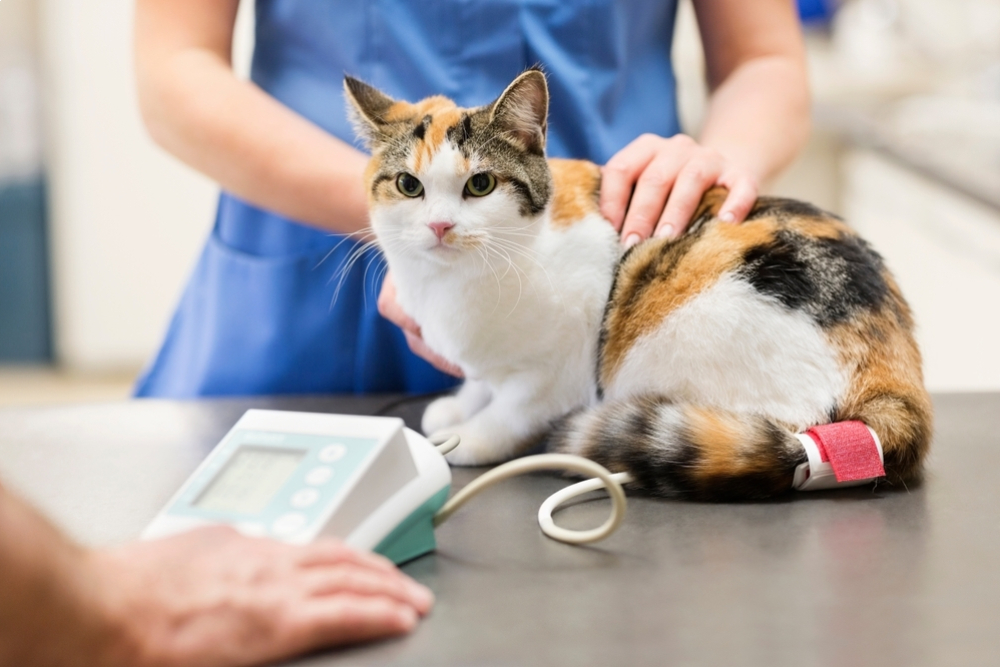
Managing hypertension in dogs and cats requires measuring blood pressure first, which sounds obvious but is frequently skipped in routine wellness visits. Hypertension is common in senior pets, particularly those with kidney or thyroid disease, and its consequences accumulate in silence. Hypertensive retinopathy involves damage to the retina from elevated blood pressure and can cause sudden blindness in cats. It is entirely preventable when hypertension is caught and managed early.
Thyroid Testing
Dogs
Hypothyroidism in dogs involves an underactive thyroid gland producing insufficient hormone. Signs include weight gain without dietary change, hair thinning, lethargy, cold intolerance, and skin changes. It is manageable with daily medication, but the systemic effects of untreated hypothyroidism accumulate gradually.
Cats
Feline hyperthyroidism is one of the most common diseases in cats over ten years of age and involves an overactive thyroid. Affected cats often seem to be aging well at first, eating voraciously, staying active, and maintaining their energy. What’s actually happening is a hypermetabolic state that gradually damages the heart and kidneys. Treatment options include medication, radioactive iodine therapy, and dietary management, and outcomes are excellent when the condition is caught early. Caught too late, and cats will develop heart disease, accelerate kidney disease, and even go blind.
What Does Cardiac Screening Involve?
Heart disease is common in senior pets and often progresses through long asymptomatic phases before causing noticeable symptoms. Common cardiac conditions in senior pets include mitral valve disease common in small breeds like Cavaliers, Dachshunds, and Chihuahuas, dilated cardiomyopathy in large breeds, and hypertrophic cardiomyopathy in cats.
Cardiac diagnostics include:
- Auscultation: listening to the heart with a stethoscope for murmurs and lung sounds indicating fluid buildup
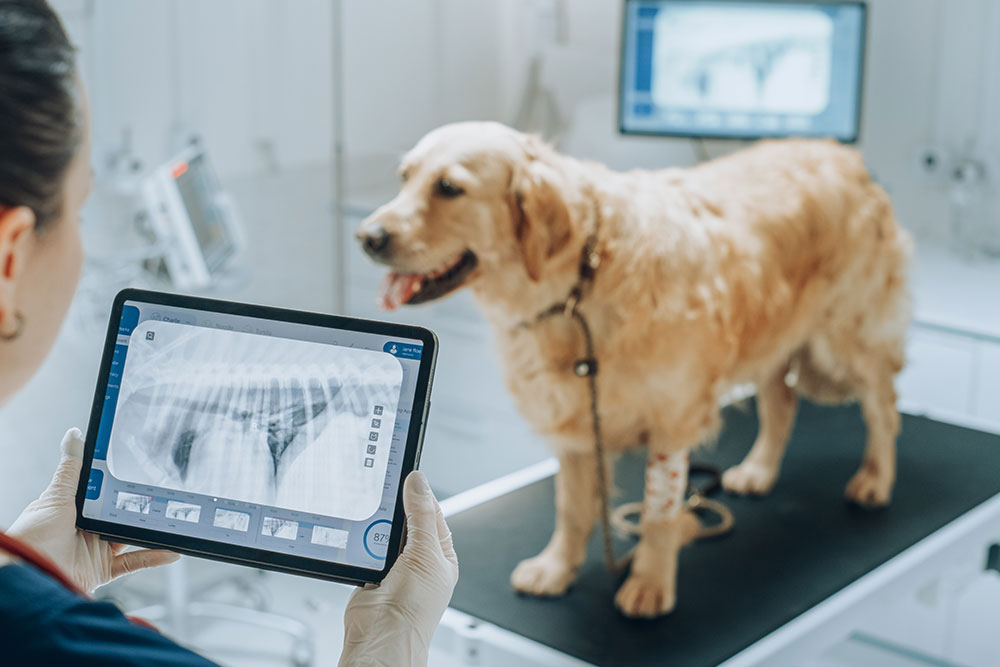
- Thoracic radiographs: to evaluate heart size and shape, and look for fluid in the lungs
- Echocardiography: ultrasound examination that views the heart’s size and motion
- EKG: provides information about the heart’s electrical rhythm
- NT-proBNP blood testing: signals cardiac muscle stress before clinical signs develop
Our advanced diagnostic capabilities include cardiac ultrasound and radiographs to get the full picture of your pet’s heart health.
X-Rays, Ultrasound, and Cancer Screening
Radiographic imaging is recommended in senior wellness exams to evaluate the chest (heart size, lung changes, early masses) and abdomen (organ size and shape, bladder stones, early tumors). It’s also useful for evaluating arthritic changes in the joints, or screening for bone cancer in breeds at risk for osteosarcoma like Rottweilers and other giant breeds, some of which are more than 100x more likely to develop the bone cancer compared to cross-bred dogs.
Abdominal ultrasound adds real-time visualization of organ architecture, texture, and blood flow, providing detail that radiographs cannot. For large breed dogs at risk for hemangiosarcoma, regular ultrasound screening can result in catching a tumor early before internal bleeding requires emergency surgery. It’s estimated that 1 of every 5 Golden Retrievers and 1 of every 10 German Shepherds will develop this splenic tumor.
Some dog breeds benefit from additional cancer screenings. It’s estimated that 1 out of every 15 dogs born today will have lymphoma at some point in their lives, and about 1 in every 8 Golden Retrievers will develop this cancer. New blood-based lymphoma screenings are now available that can pick up lymphoma up to a year before they show symptoms, allowing for faster treatment.
Beyond imaging and bloodwork, a good senior wellness visit includes a thorough physical examination checking for lumps and bumps. Getting warts, cysts, fat deposits, and other masses is extremely common, but ensuring those growths aren’t cancerous is an important part of screening your senior. We can perform a fine needle aspiration, where we remove cells from the mass, and then look at them under a microscope to examine for cancerous changes. This lets us know if they are okay to leave and monitor, or if they should be removed and have further testing, like biopsy, performed.
Kidney Disease Monitoring
Chronic kidney disease in cats is extremely common in older cats and progresses silently until a significant portion of kidney function has been lost. It affects approximately 40% of cats over age 10, and 80% of those over age 15\. Serial bloodwork, urinalysis, and blood pressure measurement together allow us to catch early changes and slow progression meaningfully with dietary management, hydration support, and medications. The same approach applies to dogs with kidney disease.
What makes kidney disease particularly important to catch early is that kidneys do not regenerate. What we can do with early detection is protect the remaining function and slow the rate of decline significantly. A cat caught in Stage 1 chronic kidney disease has a very different prognosis than one caught in Stage 3, which is why routine monitoring in every senior cat matters even when they appear perfectly well.
How Do We Manage Joint Pain and Mobility?
Arthritis is among the most common age-related findings in senior screenings. Arthritis management has improved significantly in recent years.
- Joint supplements including glucosamine and chondroitin provide baseline joint health support, and our pharmacy carries both dog hip and joint supplements and cat joint supplements.
- Omega fatty acid supplementation supports skin, coat, and joint health, acting as an anti-inflammatory and improving mobility; our pharmacy carries options for both dogs and cats.
- Laser therapy reduces joint inflammation and pain non-invasively and is a valuable addition to the mobility management plan for arthritic senior pets.
- For dogs with chronic osteoarthritis pain, Librela is a monthly injectable monoclonal antibody therapy that targets the pain pathway directly and provides sustained relief. For cats with arthritis, Solensia offers the same mechanism in a feline formulation.
- Other pain medications, like NSAIDs (non-steroidal anti-inflammatory drugs), add another option for daily pain management.
Watching for Cognitive and Behavioral Changes
Cognitive dysfunction syndrome (CDS) is the canine and feline equivalent of dementia and is significantly more common in older pets than most families realize. Signs include disorientation in familiar environments, changes in the sleep-wake cycle (often restlessness or vocalization at night), reduced interaction with family members, loss of housetraining, and staring at walls or into space. These signs are easy to dismiss as “just getting old,” but they represent a medical condition with management options.
Nutritional supplements formulated to support brain health, environmental enrichment, and in some cases prescription medication can slow progression and improve quality of life. Senior Vitality Pro Cognitive Soft Chews and Senilife support brain health in aging dogs and cats and can be discussed at your senior wellness visit. If your senior pet has started waking you up at 2 a.m. or seems lost in the backyard they have lived in for ten years, that is worth mentioning.
Dental Health as Part of Senior Care
Dental disease in senior pets is among the most underrecognized conditions affecting quality of life. Pain from periodontal disease is often silent, and pets don’t stop eating even when their mouths hurt. The bacteria from dental disease can affect the heart, liver, and kidneys, accelerating health problems. Regular dental exams with x-rays to find disease hiding under the gumline with professional cleanings are a key part of good senior pet care. Our dedicated dental care services address senior dental needs with the extra care they deserve, using personalized anesthetic protocols and dedicated monitoring to ensure safety and comfort.
Frequently Asked Questions About Senior Pet Screening
When does my pet officially become a senior?
Most cats and small to medium dogs are considered senior around seven to eight years. Large and giant breed dogs are considered senior earlier, often at five to six years. Our team will discuss the right screening timeline based on your pet’s breed, size, and individual health history.
My pet seems completely healthy. Why do they need senior screening?
Most serious conditions in aging pets are clinically silent in their early stages. Normal behavior and appetite do not rule out kidney disease, thyroid dysfunction, or cardiac changes. Screening finds what the exam cannot.
How often should senior pets be screened?
Once or twice a year is our general recommendation for senior pets, depending on health status. Pets with known conditions benefit from more frequent monitoring.
What if we find something?
Finding a problem early means more options. Most conditions identified through senior screening are manageable, and some are curable. The goal is never to worry you. It is to give your pet the best possible outcome.
Are the costs of senior screening worth it?
Early detection consistently reduces the total cost of care over time because conditions treated in early stages require less intensive intervention than those found late. More importantly, it means more good time with your pet.
Helping Your Senior Pet Thrive
Senior screening is one of the most meaningful things you can do for an aging pet. Cupertino Animal Hospital is here to make the process thorough, clear, and as stress-free as possible. Contact our team to schedule a senior wellness exam and together we can keep your old friend as comfortable and healthy as possible in their golden years.