
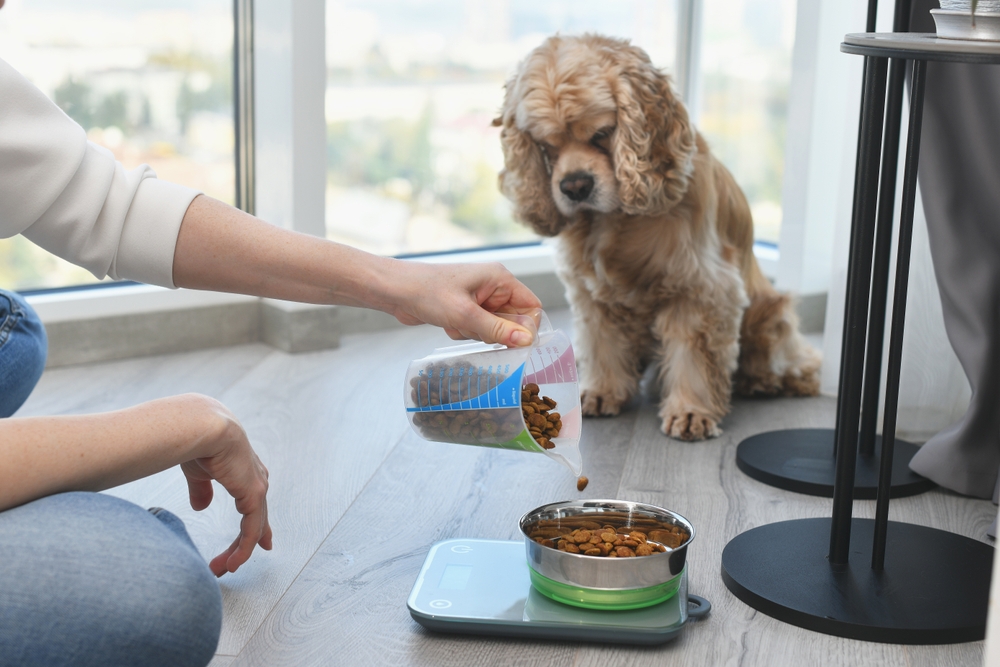
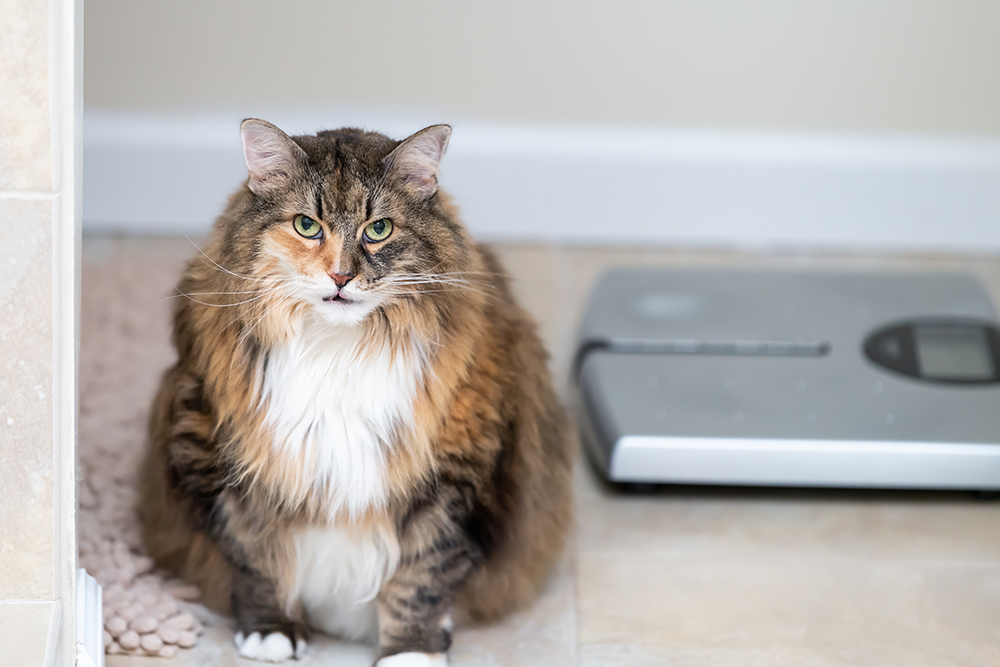
If you measure every meal and still watch the number on the scale creep, you are not alone, and your pet food bag is part of the reason. Those feeding charts are calibrated for an average intact adult at moderate activity, which makes them a starting point, not a prescription, and a noticeably loose fit for most specific dogs and cats. Reproductive status, age, breed, treats, the half-sandwich a kid shared, the cheese around the morning pill. None of that is in the chart. Pet obesity now affects more than half of dogs and cats in the United States, and the math is unforgiving: an extra twenty calories a day works out to roughly two pounds in a year, a sixth of a twelve-pound cat. That’s like a 175-pound human carrying an extra thirty pounds.
Obesity leads to a number of serious diseases in pets, so weight is something we track as a vital sign at every wellness exam, the same way we track temperature and heart rate. Cupertino Animal Hospital cares about preventing illness in your pet, and weight management is a key part of that. If the scale has moved on you and you want a fresh look at what your pet actually needs, schedule a visit and we will work the calculation through with you.
What Matters Most About Feeding the Right Amount
- Bag guidelines aim at an average pet. Most dogs and cats need adjustment for age, neuter status, and activity.
- Body condition tells you more than the scale. Two pets at the same weight can have very different fat-to-muscle ratios.
- Treats are food. They commonly account for 20 percent or more of a pet’s daily intake.
- Cats need to lose slowly. Crash weight loss in cats can trigger hepatic lipidosis, a life-threatening liver condition.
How Many Calories Does My Pet Really Need?
Pet food is denser than it looks. A single cup of dry dog food can carry 300 to 500 calories depending on the formula. For a twenty-pound dog with a roughly 600-calorie daily need, two cups is the entire day. Layer on a couple of training treats, a dental chew, the chips that fell on the kitchen floor, and the corner of a sandwich, and the total can run 20 to 50 percent over target before anyone notices. We weigh and chart your pet at every wellness exam, so a slow drift surfaces before it becomes a real number on the scale.
Calorie totals are not the only piece of how much to feed. Protein, fat balance, and fiber each play a role in how full your pet feels and how well the calories get used. A formula that is calorie-rich and protein-poor produces a pet who is overweight and still hungry, which is the worst of both outcomes. The right plan combines accurate calories with appropriate macronutrient balance and an honest tally of the treats coming in.
How Does Body Condition Scoring Work?
The scale is one input, not the whole answer. Two pets at the same weight can have entirely different compositions, one lean with appropriate muscle and the other carrying excess fat but next to no muscle. At home, you can do a reasonable body condition check in three angles:
- From above: your pet should show a visible waist behind the ribs rather than a straight or barrel-shaped silhouette.
- From the side: the belly should tuck up behind the rib cage rather than sit level with the chest.
- By touch: the ribs should be findable under a thin layer of fat, like the feel of the back of your hand rather than knuckles (too thin) or padded palm (too much).
A score of 4 to 5 out of 9 is ideal for most pets, and the body condition scoring charts show what each range looks like at a glance. Veterinary nutritionists now score muscle on its own, because lean tissue can quietly fall away even when body weight holds steady. We watch both at your pet’s annual visits, and a monthly check at home, especially for fluffy or long-coated pets, catches drift early.
How Should I Use a Calorie Calculator?
Online tools like the Pet Nutrition Alliance calorie calculator are useful starting estimates, not final answers, because they cannot see your pet’s metabolism, health conditions, or actual daily activity. The right way to use one is as a first hypothesis you then test against your pet’s body condition over a few weeks.
Our team can run the calculator with you at a wellness visit or nutrition consultation when you want a second set of eyes on the math. Before you open the calculator at home, gather three numbers: current weight, body condition score, and calories per cup or can on the bag (look for the kcal/cup line in the small print). Run the calculator, separating out a treat allowance if you give treats. Convert the daily calorie target into volume using the food’s kcal density, and weigh that volume on a kitchen scale once so you know what it looks like in your measuring cup. Then reevaluate every two to four weeks: if body condition is creeping the wrong way, adjust the portion by 5 to 10 percent rather than making a dramatic cut. Calorie needs shift with seasons, exercise, age, and health, so the number that worked last winter may not fit this summer. A senior dog who used to run the trail and now mostly walks the block needs less than a year ago. Steady adjustment and monitoring is the heart of pet obesity prevention in practice.
Where Do Hidden Calories Come From?
The plan most often falls apart at the calories in treats. Here is the math against a twenty-pound dog’s roughly 600-calorie daily budget:
| Treat | Calories | Share of dog’s day | Lower-calorie swap |
| Medium Milk-Bone | 40 | About 7% | Half-piece or break into thirds |
| Dice-sized cube of cheese | 30 | About 5% | Pea-sized portion |
| Single dental chew | 70 to 100 | Up to 17% | Smaller size for body weight |
| Half-slice plain hot dog | 70 | About 12% | Sliver of plain cooked chicken |
Three small training treats and a dental chew put a dog at a quarter of the day before any food has been served.
Hidden calories rarely come from one big source. They come from the table scraps shared at dinner, the dental chew that gets counted as cleaning instead of food, the cheese or bread wrapped around the daily pill, the licked-clean yogurt cup, and the disconnect between household members who do not realize the dog already got two treats at breakfast. Once you start counting, the picture usually surprises you. The simplest fix is to keep the ritual but downgrade the load: a sliver of carrot, a piece of cucumber or zucchini, a few pieces of air-popped popcorn for dogs, plain green beans, or kibble pulled from the daily allowance. Pets respond to the connection of a treat much more than to the calorie count, so a vegetable earns most of the same enthusiasm as a biscuit.
How Do I Build a Treat Allowance That Actually Works?
Here is an approach that works for most households. Each morning, measure your pet’s entire daily food allowance, meals plus treats, into a single jar on the counter. Through the day, training treats and filler for food puzzles come out of that jar, and whatever is left goes into the bowl at the next meal. When the jar is empty, the day’s calories are spent.
It works because:
- The total is fixed, so the day cannot accidentally run long.
- The limit is visible, so every household member can see at a glance what is left.
- It stays simple, so nobody is doing daily mental math on how many treats the dog has had.
For higher-value treats reserved for special occasions, count them toward the day’s total like everything else and pull an equivalent volume of kibble out of the jar. If you want a sanity check on the math, ask our team and we will work through your pet’s numbers with you.
Could a Medical Problem Be Behind My Pet’s Weight Change?
Before assuming a weight problem is purely about feeding, it is worth ruling out the conditions that can shift weight or appetite independently. Thyroid disease is the classic example on both ends: hypothyroidism causes weight gain in dogs, and hyperthyroidism causes weight loss in cats even as appetite goes up. Diabetes, Cushing’s disease, and chronic kidney disease all alter weight and appetite patterns. Malabsorption and inflammatory bowel disease change body condition even when food intake looks normal.
Chronic pain is a major contributor. Pain quietly reduces activity, and a pet who hurts to move puts on weight without eating more. More weight puts more stress on joints, which makes them move less, creating a cycle of pain and weight gain.
Step one for addressing weight changes is an exam with your veterinarian. Dental discomfort, which is usually silent until you look, can drop weight when chewing hurts, and our dental cleanings with full intraoral X-rays under anesthesia address what surface exams miss. Diagnostics like bloodwork and digital imaging pick up the internal issues causing weight gain or loss.
What Medical Problems Does Obesity Cause?
Carrying excess weight has its own stack of consequences. Insulin resistance climbs with body fat and drives the development of diabetes mellitus. Urinary stones are more common in overweight dogs. Joint disease and intervertebral disc disease progress faster when carrying extra pounds. Systemic hypertension rides along with excess weight, and the margin against heat stroke narrows when an overweight pet cannot shed heat efficiently.
Overweight cats tend to store more fat in their liver, creating the potential for a dangerous condition. Cats that lose weight too quickly are at real risk for hepatic lipidosis, which is why feline weight loss plans aim for no more than 1 to 2 percent of body weight per week, and never a hard fast.
How Does the Feeding Plan Change Over Time?
A nutrition plan is not a one-time setup. The right plan for an active intact young pet is not the right plan for a neutered six-year-old, and neither is right for the eleven-year-old version of the same pet. Our routine wellness visits with bloodwork and body composition assessment catch the shifts that mean it is time to retune. When changing foods is part of the plan, diet transitions should happen across 7 to 10 days, mixing in the new food in growing proportion, and if your pet refuses, slow the swap further or stop and reassess.
Prescription Weight-Loss Diets
Not all weight-loss diets are created equal. Prescription formulas go through feeding trials to confirm safe fat loss while preserving lean muscle, calibrate protein-to-calorie ratios, add specific nutrients for fat metabolism, and use controlled fiber levels that keep pets feeling satisfied on fewer calories. Ask our team about prescription weight-management diets sized for your pet’s needs.
Enrichment-Based Feeding
Dogs and cats lose weight better when meals are an activity rather than a bowl event. Puzzle feeders, slow bowls, snuffle mats, and scatter feeding all anchor proven slim-down strategies on enrichment instead of portion control alone, and they turn food into mental stimulation, which leaves dogs more satisfied, quieter at the dinner table, and tired from the work, and gives cats an outlet for their natural hunting drive. For cats specifically, multiple small meals throughout the day, food puzzles that reward batting and pawing, and chances to chase or climb between meals are what move the needle. Gradual calorie reduction paired with more engagement is what sticks.
What Do Pet Families Most Often Ask About Pet Weight?
How Quickly Should My Overweight Pet Lose Weight?
Slow. Dogs and cats should lose no more than 1 to 2 percent of body weight per week, and faster loss in cats can trigger hepatic lipidosis. A twelve-pound cat heading toward ten pounds should expect that journey to take three to six months, not weeks.
My Pet Acts Hungry All the Time. Are They Underfed?
Possibly, but hunger has many sources beyond calories: low-satiety food, boredom, learned begging behavior, or medical conditions like diabetes, hyperthyroidism, or malabsorption. If body condition is appropriate and your pet seems otherwise healthy, the answer is often about food choice and feeding strategy, not total intake.
Can I Just Measure With Cups Instead of Weighing Food?
Cups work, but a kitchen scale is more accurate. Pet families using measuring cups consistently over-portion by 20 to 50 percent in studies. Weighing food in grams gives the precision the calorie math actually needs, and it matters most for pets on strict weight management.
Are Some Breeds Harder to Keep Lean?
Some are. Labradors, Beagles, Cavaliers, Pugs, Dachshunds, and Cocker Spaniels show higher rates of obesity, whether through genetic differences in appetite regulation or the lifestyle patterns those breeds tend to share. They need stricter calorie discipline than the average pet.
Cupertino Animal Hospital Is Here To Help
The hardest part of feeding right is that the number that worked last year may not be the number that works this year, and the drift is gradual enough to miss. Our team is here to track weight, body condition, and muscle score at every visit, and to flag the drift before the picture shows it.
If you want a fresh look at your pet’s plan, give us a call and we will work through the numbers with you.




Leave A Comment