
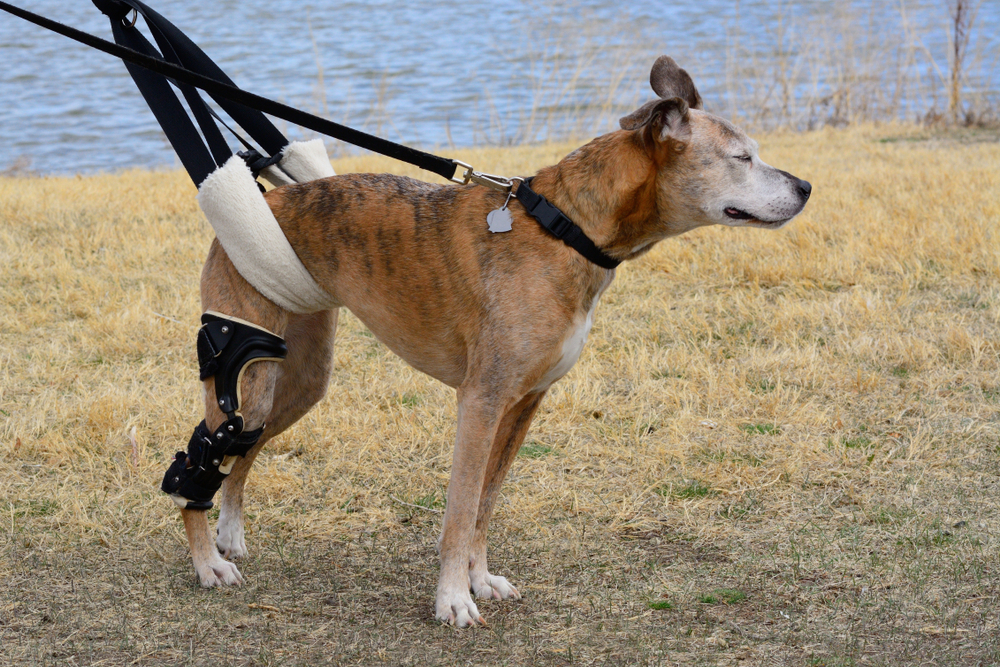
CCL Tears in Dogs: How Surgery Restores Knee Stability
Your dog was fine yesterday, but today they won’t put weight on their back leg. Or perhaps you’ve noticed a limp that comes and goes, always a little worse after a long walk or a game of fetch. These are classic signs of a cranial cruciate ligament (CCL) injury, the canine equivalent of a torn ACL in people. The CCL keeps the knee joint stable, and when it tears (either partially or completely), the joint shifts in ways that cause pain, inflammation, and accelerating damage to the cartilage and surrounding structures.
At Cupertino Animal Hospital, we evaluate CCL injuries using orthopedic examinations and diagnostic imaging to determine the extent of the damage and connect you with a trusted surgical specialist. We also play an active role in post-surgical recovery, including laser therapy to support healing and comfort. Contact us to schedule an orthopedic evaluation if your dog has been limping.
What Is a CCL Injury and Why Does It Happen?
Causes and Risk Factors
The cranial cruciate ligament is one of two ligaments that cross inside the knee, providing the primary stabilization against the tibia (shin bone) sliding forward relative to the femur (thigh bone). When it tears, that forward sliding happens with every step, grinding cartilage and rapidly accelerating joint damage.
Most canine cruciate ligament injuries are not purely traumatic events the way human sports ACL tears tend to be. Instead, they develop from a combination of gradual ligament degeneration and individual anatomy, with a sudden movement serving as the final trigger on an already-compromised structure. In the Bay Area, active dogs who hike the trails, run at the dog park, and play hard on weekends are regularly exposed to the quick pivots and uneven terrain that put knees under stress.
Common risk factors:
- Abrupt pivoting, twisting, or directional changes during high-energy play
- Irregular exercise patterns where sedentary periods alternate with intense activity
- Breed predisposition: Labrador Retrievers, Rottweilers, Golden Retrievers, and Boxers carry higher baseline risk due to knee geometry
- Excess body weight, which amplifies joint stress with every stride
- A prior partial tear that went undetected and progressively worsened
Maintaining a healthy weight and keeping exercise consistent rather than episodic both reduce long-term CCL risk. Regular wellness exams give our team the opportunity to assess your dog’s joint health and body condition as part of the bigger picture.
Signs Your Dog May Have Torn Their CCL
Recognizing the Clinical Picture
CCL injuries do not always announce themselves dramatically. Some dogs suddenly refuse to bear weight at all, making the injury obvious. Others develop a limping pattern that waxes and wanes, sometimes improving enough with rest that owners assume the problem has resolved.
Signs that point toward a CCL injury:
- Hind-limb lameness that is clearly worse after activity and improves only briefly with rest
- Visible swelling or thickening along the inside of the knee joint
- Reluctance to rise from lying down, or hesitation before jumping
- A toe-touching gait where the affected leg barely grazes the ground
- Sitting with the knee stuck out to the side rather than tucked underneath
- Lameness that returns repeatedly after apparent short-term improvement
A true sprain improves meaningfully within a week of rest. A CCL injury does not. If the limp is still present after a week of reduced activity, it warrants evaluation rather than continued observation. Our diagnostics allow us to assess the injury accurately and get a clear answer quickly.
How CCL Injuries Are Diagnosed
Imaging and Orthopedic Assessment
Confirmation begins with physical examination. The drawer sign and tibial thrust test assess how much the tibia slides relative to the femur when pressure is applied, confirming ligament instability. Some dogs require light sedation to allow a thorough, accurate exam if they are painful or tense.
X-ray diagnostic imaging assesses secondary joint changes including fluid accumulation, early arthritis formation, and bone spur development, and rules out fractures or other bony contributors. For complex cases where soft tissue detail, joint conformation, or precise surgical planning is needed, MRI and CT imaging provide additional information that standard radiographs cannot.
Once we have a clear picture of what is happening in the joint, we will discuss the findings with you and refer your dog to a trusted orthopedic surgical specialist for the procedure that best fits their anatomy, size, and activity level.
What Happens Without Treatment?
This question deserves a direct answer because many families hope that rest will allow healing. It will not.
The torn CCL leaves the knee mechanically unstable, and that instability causes ongoing damage with every step. The cartilage meniscus, which cushions the joint, is at high risk of tearing from the abnormal movement. Arthritis develops rapidly in an unstable joint, and that arthritis is permanent and progressive regardless of whether surgery happens later.
Resting a dog with a CCL tear reduces acute pain temporarily, but the underlying instability continues causing structural damage throughout the period of rest. Delaying treatment translates directly into more advanced arthritis at the time of surgery and a more complicated recovery. If your dog is limping, contact our team to schedule an evaluation rather than taking a wait-and-see approach.
Conservative Management: When It Is and Is Not Appropriate
For very small dogs, typically those under 15 pounds, the biomechanics of the knee allow some patients to stabilize through fibrous tissue formation with months of strict rest and controlled activity. For these dogs, conservative management is a reasonable discussion.
For medium, large, and giant breed dogs, the evidence consistently shows that surgery produces better long-term functional outcomes than conservative management. The joint rarely stabilizes adequately with rest alone at those sizes, and arthritis progresses regardless. This is not meant to alarm anyone; it is meant to make sure the decision is based on accurate information rather than hope for a different outcome. If your dog’s size, age, or health history raises questions about whether surgery is the right path, bring those specifics to the evaluation and we will work through them with you and the surgical specialist together.
Surgical Options for CCL Repair
TPLO, TTA, and Extracapsular Repair
Surgery restores mechanical stability to the knee and slows arthritis progression. The orthopedic specialist we refer to will determine which procedure best fits your dog’s anatomy, size, activity level, and overall health. Here is an overview of the most common approaches:
TPLO (Tibial Plateau Leveling Osteotomy)
TPLO surgery changes the geometry of the knee so the normal forces of walking no longer require an intact CCL to maintain stability. The top surface of the tibia is cut and repositioned, then held in place with a bone plate while healing occurs. TPLO consistently delivers excellent long-term outcomes in active and medium to large breed dogs and is the most widely recommended procedure for these patients.
TTA (Tibial Tuberosity Advancement)
TTA is a complementary bone-modifying approach that redirects the force vector acting across the knee joint. It is used in active, medium to large breed dogs and produces outcomes comparable to TPLO in appropriate candidates.
Extracapsular Repair (Lateral Suture)
Extracapsular repair places a strong synthetic suture outside the joint to mimic the CCL’s stabilizing function while fibrous scar tissue forms over time. It is best suited for smaller or less active dogs, and for patients where the bone-modifying procedures carry higher risk. Long-term durability in larger dogs is generally lower than TPLO or TTA.
| Procedure | Best Suited For | Mechanism |
| TPLO | Medium to large breeds, active dogs | Repositions tibial plateau to eliminate need for CCL |
| TTA | Medium to large breeds, active dogs | Advances tibial tuberosity to redirect joint forces |
| Extracapsular repair | Small or less active dogs | Synthetic suture stabilizes joint while scar tissue forms |
Recovery and Rehabilitation
Recovery from CCL surgery is a process, and it is one where Cupertino Animal Hospital plays an active supporting role. Rehabilitation therapies including controlled leash walking, hydrotherapy, and therapeutic exercise rebuild muscle, restore range of motion, and protect the surgical repair during healing.
We offer laser therapy as part of post-surgical recovery for CCL patients. Therapeutic laser uses specific wavelengths of light to reduce inflammation, manage pain, and accelerate tissue healing at the cellular level. It is non-invasive, well-tolerated by most dogs, and can meaningfully shorten the recovery timeline when integrated into a structured rehabilitation plan. Reach out to ask about laser therapy appointments for your dog after surgery.
General post-surgical activity milestones:
| Timeframe | Activity Level |
| Weeks 1-2 | Crate rest with leash-only bathroom breaks; incision recheck |
| Weeks 3-4 | Short, slow leash walks; gradual duration increase |
| Weeks 5-7 | Longer leash walks; controlled movement |
| Week 8+ | Recheck; off-leash activity considered if healing is confirmed |
No running, jumping, or unsupervised activity during recovery. The first two weeks in particular are the window where the repair is most vulnerable to disruption.
Managing Crate Rest: Practical Strategies
Crate rest is hard, particularly for high-energy Bay Area dogs accustomed to regular outdoor activity. Here is what actually helps:
- Position the crate where household activity is visible so your dog does not feel isolated
- Use food puzzles and stuffed enrichment toys for mental engagement without movement
- Take slow leash sniff walks for mental stimulation (at the pace your discharge instructions allow)
- Keep a predictable daily schedule
- Chat with our team if confinement anxiety becomes a barrier to safe healing
Surviving crate rest with your dog requires realistic expectations and some creativity. The two-week mark is the most critical; setbacks during this window can compromise the repair and require additional intervention.
Long-Term Joint Health: Surfaces, Warmth, and Weight
Daily Habits That Protect the Healing Knee
Warm-ups and cooldowns before and after activity reduce injury risk during recovery and long after. A slow five-minute walk before any exercise session prepares the joint rather than sending it from rest to full effort. Non-slip surfaces at home, ramps where feasible, and avoiding tight turns on hard floors all reduce unnecessary stress on the healing leg.
Weight control is arguably the single most impactful lifestyle factor in long-term joint outcome. Every extra pound of body weight increases load on the repaired knee, accelerates arthritis, and raises the risk of injury to the opposite leg. Studies consistently show that a significant percentage of dogs who tear one CCL will injure the other within two years, and excess weight is one of the most modifiable risk factors for that second injury.
Dog hip and joint supplements can be added to support cartilage health and smooth movement through recovery and beyond. Ask our team which formulation is appropriate for your dog’s size and stage of healing.
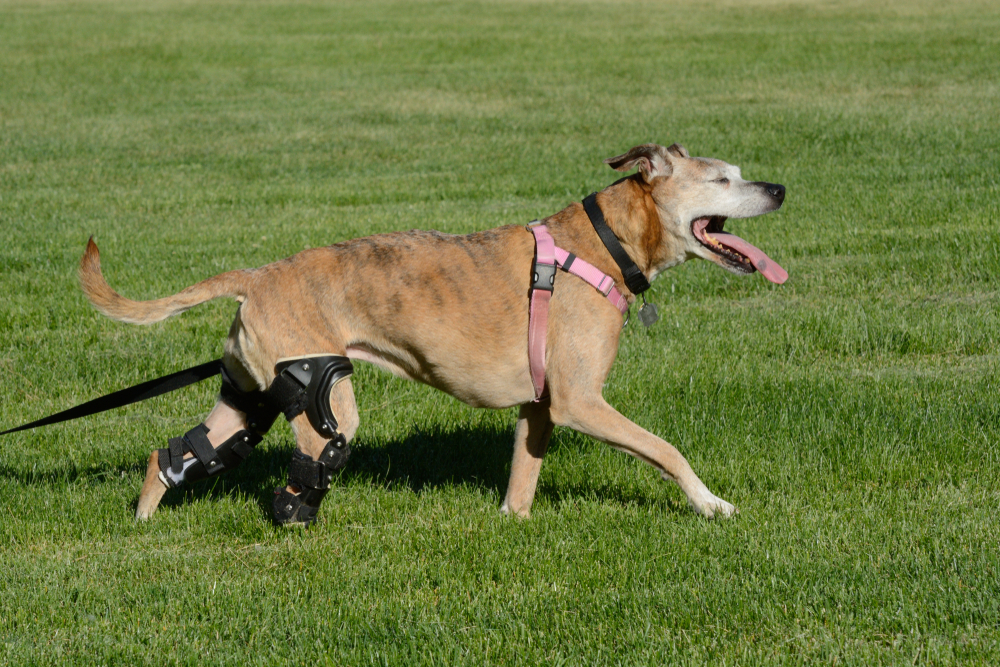
Frequently Asked Questions About CCL Tears
Will my dog’s limping get better with rest alone?
Brief improvement during rest is common and misleading. The underlying instability and damage continues even when symptoms are temporarily reduced. Persistent lameness after a week of rest warrants evaluation.
How do I know if the other leg is at risk?
There is no reliable way to predict which dogs will injure the second leg. The best protective measures are weight management, consistent conditioning, and appropriate activity progression after the first surgery.
What is the success rate for CCL surgery?
Outcomes depend significantly on the procedure chosen, the dog’s size, how promptly treatment was pursued, and how consistently the recovery protocol was followed. For appropriately selected patients undergoing TPLO or TTA, return to full or near-full function is the expected outcome.
How long before my dog can hike or play fetch again?
Most dogs reach the 8-week recheck in good shape and can begin progressive off-leash activity from there. Returning to demanding activity like hiking or sustained running typically takes three to four months with consistent rehabilitation.
A Clear Path Forward
CCL injuries are the most common orthopedic problem we see in dogs, and they are also among the most successfully treated. The dogs that do best are the ones whose families recognize the signs early, pursue a clear diagnosis, and commit to the recovery process with the same energy they bring to the rest of their dog’s care.
At Cupertino Animal Hospital, we handle the diagnosis, coordinate the referral to a trusted orthopedic surgeon, and support your dog through recovery with laser therapy and ongoing care. If your dog has been limping or favoring a hind leg, contact our team at 408-252-6380 to schedule an orthopedic evaluation. The sooner the joint is assessed and stabilized, the more we can protect it from the damage that accumulates while instability goes untreated.




Leave A Comment