A soft, puffy swelling that shows up in your dog's ear flap over the course of a day is most often a hematoma, meaning blood has collected between the layers of skin and cartilage. It happens when hard head shaking or scratching ruptures a small vessel inside the flap, so the swelling itself is rarely the whole story. Something was irritating that ear first, usually an infection, inflammation, or a foxtail working its way down the canal. Left alone, the trapped blood is painful, and as it slowly reabsorbs it can scar the flap into a thickened, crumpled shape. Treating it within a day or two takes the pressure off and gives us the chance to fix the ear problem underneath.
Cupertino Animal Hospital has run a dedicated Pet Ear Care Center since 2015, so a swollen flap gets both halves of the job: the pocket opened and emptied, then held closed with small tacking sutures or a soft drain, which lets it heal flat rather than fill back up. Our veterinarians are true ear experts, and we use video otoscopy and endoscopy to see the whole canal, remove a foxtail or polyp if one is hiding down there, and clear up the infection that started the scratching. Treating both problems at once is what keeps the swelling from coming back, and it is part of the everyday veterinary care we provide in Cupertino. If your dog's ear has puffed up or they will not stop shaking their head, give us a call and we will get them in for a look.
What a Swollen Ear Flap Is Telling You
- An ear hematoma is a pocket of blood trapped inside the ear flap, and it usually shows up within a day of hard head shaking or scratching.
- The swelling is a symptom, not the whole problem, because something started the itch first: an infection, allergies, mites, or a foxtail in the canal.
- Draining the pocket and holding the flap closed takes the pressure off, while treating the canal underneath is what keeps it from filling back up.
- An untreated flap often heals thickened and crumpled, so a puffy ear is worth a visit in the next day or two rather than a wait-and-see week.
What Is an Ear Hematoma, and Why Does It Happen?
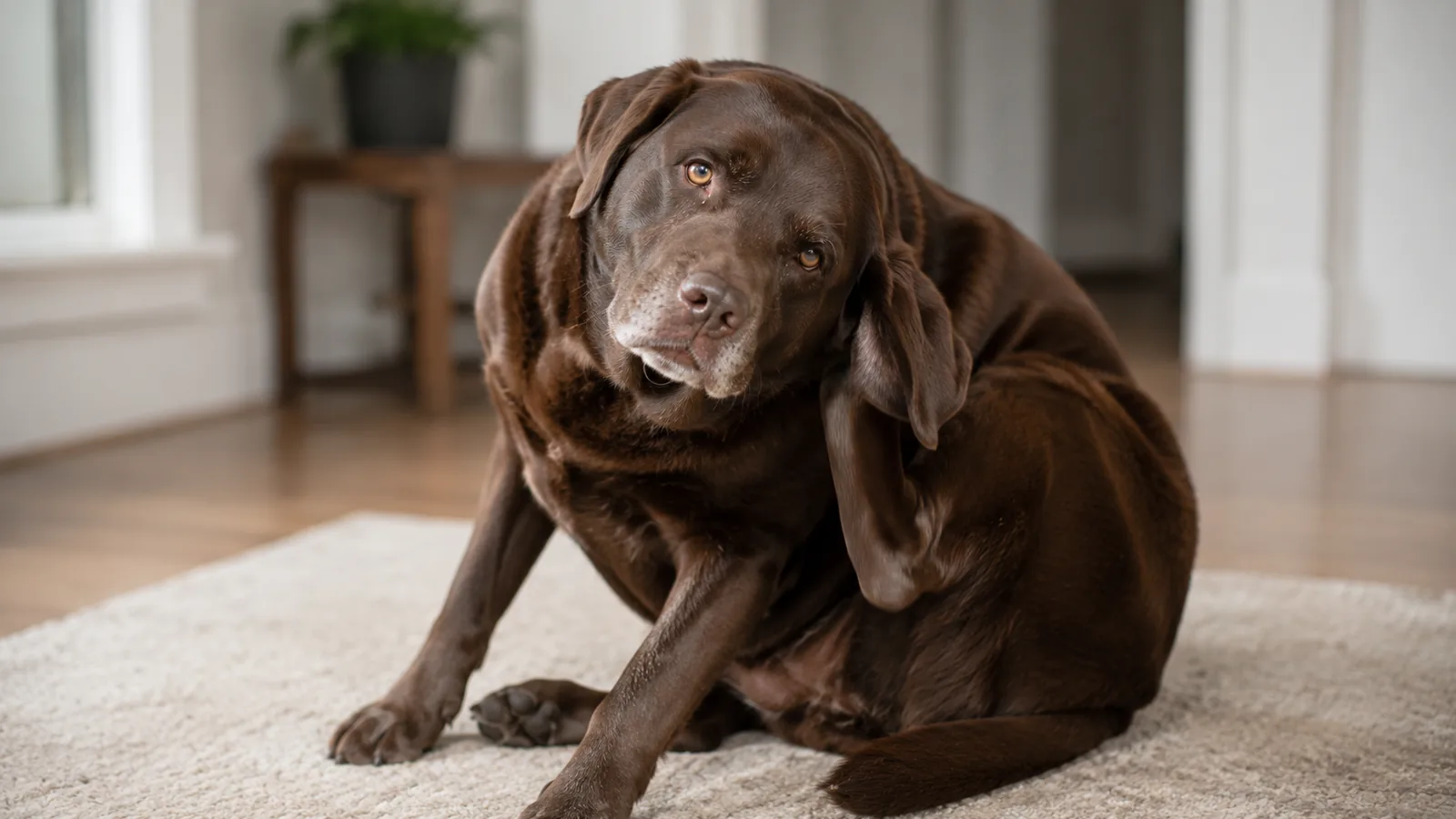
An ear hematoma forms when a blood vessel inside the ear flap ruptures and blood pools between the skin and the cartilage, turning a thin, floppy ear into something that feels like a warm water balloon. The violent head shaking that comes with an irritated ear is almost always what breaks that vessel.
The flap, or pinna, is built like a sandwich: a thin sheet of cartilage with skin stretched tight over both sides and small vessels running in between. Cartilage doesn't stretch, so when blood fills that space it has nowhere to go, and the pressure builds into a heavy, sore ear that your dog shakes even harder. The shaking keeps the bleeding going, and that loop rarely breaks on its own.
Left completely alone, the body does reabsorb the trapped blood over several weeks. The trade-off is scarring: as the pocket shrinks, the flap tends to heal thickened and wrinkled, and in some pets the contracted tissue narrows the opening of the canal.
Sometimes, the ear becomes so full of blood that the skin itself breaks open, either due to the pressure, scratching, or hitting the ear against something hard like shaking their head next to a door frame. The result can be dramatic: head shaking while the blood is released from the ear can create a rather gruesome looking scene in your home. If this happens, apply pressure with a clean cloth and seek care promptly.
Seeing the whole story takes a look at the entire ear, not just the flap, which is why a hematoma appointment at our Pet Ear Care Center starts down in the canal rather than at the puffy flap in front of us.
What Does an Ear Hematoma Look and Feel Like?
The swelling of an aural hematoma can take up one small pocket or the entire ear flap, and pets often hold the head tilted toward the heavy side and pull away when that ear is handled. Early on the pocket feels soft and squishy. After a few days it firms up.
The behavior usually tells the story before the swelling does:
- Head shaking or a new head tilt: shaking that goes on for more than a few minutes at a time, or a head that keeps drifting toward one side.
- Scratching at one ear: a back foot working the same ear over and over, sometimes hard enough to break skin.
- Odor, redness, or discharge: a yeasty or sour smell and brown, yellow, or waxy debris at the canal opening.
- Pain when the ear is touched: flinching, ducking, or growling from a pet who normally loves having their ears rubbed.
- A flap that feels wrong: thick, warm, and boggy instead of thin and floppy.
Not every swollen flap is a hematoma, either. An abscess from a bite or a scratch, an allergic swelling after a sting, and a growth on the pinna can all look similar from the outside, and each one calls for a different fix, so the swelling is worth an exam rather than a guess.
A word on what not to try at home. Never drain the pocket yourself with a needle or a blade, because it refills within hours and an open route into that space invites bacteria into tissue that heals slowly. Skip leftover drops from a previous pet or an old ear problem, and never use human ear products or human pain relievers, which can be toxic to dogs and cats. Cotton swabs push debris deeper and can injure the eardrum. If the flap is swelling and your pet can't settle, let us look at that canal the same day rather than waiting to see whether it softens.
What Causes Ear Hematomas in the First Place?
Nearly every hematoma begins with an ear that itches or hurts. Infection, allergies, mites, or a foreign object sets off hard shaking, and a vessel gives way. Ear shape adds risk, since long, heavy flaps swing with real force, and narrow or hairy canals trap the moisture that feeds infection.
Inflammation of the external ear canal, or otitis externa, sits underneath most hematomas, because the itch it creates is what drives the head shaking that ruptures the vessel.
| Underlying trigger | What you might notice | Why it ends in a hematoma |
| Bacterial or yeast infection | Odor, brown or yellow discharge, red canal | Constant itch drives violent shaking |
| Environmental or food allergies | Repeat flares, itchy paws and belly, seasonal timing | Canals stay inflamed between treatments |
| Ear mites | Dark, crumbly debris, common in kittens and young cats | Intense itching, usually in both ears |
| Foxtails and grass awns | Sudden onset after a walk, one painful ear | A single hard shake tears a vessel |
| Polyps or growths in the canal | Chronic one-sided discharge, head tilt, more often cats | Ongoing irritation in a canal that can't drain |
| Trauma during play or a scuffle | A scrape, bite mark, or bruise on the flap | Direct impact ruptures a vessel outright |
| Clotting or immune disorders | Bruising elsewhere, bleeding gums, uncommon | Blood pools with much less provocation |
Around Cupertino, foxtails earn their own line on that list. From late spring into fall, one grass awn picked up in a dry field can send a dog home shaking their head so hard that the flap swells before dinner. Heavy-eared breeds like Retrievers, Hounds, and Spaniels top the list for hematomas, though upright-eared dogs and cats get them too.
For a pet on their second or third ear flare in a year, a wellness exam is where we get ahead of the cycle: a full look down the canal, a swab, and an honest conversation about the real driver. Treating the flare without naming the cause is how families end up back in the same spot every few months.
Do Cats Get Ear Hematomas Too?
Cats get them less often than dogs, and a feline swelling is easy to miss under fur or on a small upright ear. When a cat's flap does fill, mites, an infection, or a polyp growing in the canal is usually behind it, so a swollen feline ear earns a careful look all the way down.
Cats also complain differently. Instead of dramatic shaking, many go quiet and head shy, groom one side of the face raw, sleep with the ear held low, or simply stop tolerating the scratch they used to lean into. The flap itself is thinner and smaller than a dog's, so repairs on cats tend to use finer sutures or a soft drain rather than a grid of tacking stitches.
In younger cats especially, a benign polyp can start in the middle ear and push outward, producing months of one-sided discharge and head shaking that never fully resolves on drops. When that pattern shows up, our endoscopy and CT scanner let us look past the eardrum and find what an otoscope alone can't reach.
How Do You Treat an Ear Hematoma?
Treatment comes in two halves that happen together. The pocket is opened and drained under sedation, then held closed with small tacking sutures or a soft drain so it can't refill, and the canal is examined and treated at the same time. Skipping that second half is the usual reason a hematoma comes right back.
| Approach | How it works | When it's considered |
| Needle drainage alone | The pocket is emptied with a syringe, nothing holds it closed | Very small, very fresh swellings; refills often |
| Incision plus a soft drain | A small opening with a drain keeps fluid moving out for several days | Thin flaps, cats, moderate pockets |
| Incision with tacking sutures | The pocket is opened, flushed, and stitched so the layers heal together | Most dogs, larger pockets, repeat hematomas |
| Medical management alone | Anti-inflammatories plus canal treatment, no surgical opening | Pets who can't be sedated; higher scarring risk |
Sedation or anesthesia isn't only for comfort during the repair. It's also the only way to flush a painful canal properly, pull a foxtail off the eardrum, and get a clean sample. Which medication goes into the ear depends on ear cytology, a swab read under the microscope that separates yeast from bacteria and rods from cocci, since each one responds to a different drug, and the prescription gets matched to what's on the slide.
Pain control comes home with your pet, usually alongside an anti-inflammatory to calm the canal and a topical or oral medication aimed at the infection. We match how we open and repair the flap to the ear in front of us, because a heavy hound flap and a thin feline pinna don't call for the same technique.
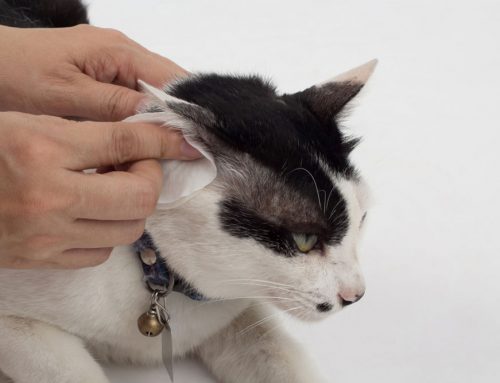
Home hygiene starts once the incision has healed and the canal is calm. From there, ear cleaning means filling the canal with a veterinary solution, massaging the base, letting your pet shake, and wiping only what you can see, never pushing a cotton swab down into the canal.
How Do You Care for the Ear While It Heals?
Healing runs a couple of weeks, and the job is keeping the ear quiet while the canal gets better. That means pain medication as prescribed, drops on schedule, an e-collar so a back foot can't undo the repair, and a recheck to confirm the pocket is staying flat before any sutures or a drain come out.
During healing, an ear wrap holds the flap gently against the head so the shaking that started the problem can't undo the repair, and it stays on only as long as your veterinarian advises. Some pets tolerate a wrap beautifully, others do better with a snood or nothing at all, and we'll figure that out with you.
Prevention, once the ear is healed, comes down to a short routine:
- A weekly look and sniff: lift the flap, check for redness or debris, and notice odor early, since smell is often the first clue.
- Dry ears after water: towel the flap and let the canal air out after baths, pools, and creek days.
- Stay on the plan: treatments for the underlying cause don't pause when the ear looks good, because that's what's keeping it that way.
- Foxtail patrol: run your hands over ears, face, and feet after a walk through dry grass, especially from May through October.
If the flap starts to puff again, or the drops stop working partway through the bottle, book a recheck instead of finishing the course and hoping.
Questions We Hear About Swollen Ear Flaps
Will an ear hematoma go away on its own?
The blood does reabsorb eventually, usually over several weeks, so in that narrow sense it resolves without treatment. What's left behind is the problem. Scar tissue tightens as the pocket shrinks, and the flap can end up thickened, crumpled, and sometimes curled tight enough to change how the canal drains. Your pet also spends those weeks with a heavy, painful ear and an untreated infection underneath.
Is a swollen ear flap an emergency?
For most pets this is an urgent problem for the next day or two, not a middle-of-the-night one, so a call during our Monday through Friday hours is the right move. A few situations do change that. A flap that's rapidly enlarging, active bleeding, sudden stumbling or a dramatic head tilt, facial droop, or a pet in obvious distress should be seen right away, and after hours that means the nearest veterinary emergency hospital.
Will my pet's ear look normal after treatment?
Repaired early, most ears heal close to their original shape, with maybe a slight thickening or a few small dimples where the sutures sat. Ears that went untreated for weeks are the ones that end up permanently crumpled. Function matters more than looks, though: a flap that heals flat lets the canal breathe, and that's what keeps the next infection from setting up shop.
Why a Puffy Ear Flap Is Worth a Quick Look
An ear that swells overnight is alarming to find, and it's also one of the more fixable things we see. Empty the pocket, hold the flap flat, treat the itch that started it, and most pets are noticeably more comfortable once that pressure is gone.
At Cupertino Animal Hospital, ear care for dogs and cats is the part of medicine we've built our days around, so bring us the swelling and the shaking together. If your pet's ear has puffed up, get them on the schedule with us here in Cupertino.