
The questions worth asking a dog daycare cluster into a few areas that predict how safe your dog will actually be: who is supervising play and at what staff-to-dog ratio, how playgroups are matched and rested, which vaccines every attending dog must have, and what the plan is when a dog gets hurt or sick. The moment before you dial the first facility is the moment you become the interviewer, and the answers matter more than the lobby or the webcam feed. A good facility welcomes that kind of specific curiosity, because sound policies are something worth showing off. Your dog cannot file a complaint afterward, so the interview you run beforehand is the only inspection that counts.
Many of the dogs we examine at Cupertino Animal Hospital spend their weekdays in group play, so the pre-daycare checkup is familiar territory for our team. A wellness exam for your dog includes the nose-to-tail physical, brings required vaccines up to date, and adds the fecal screening that keeps parasites from making the rounds of a shared play space. We can also flag anything that should keep a dog home for now, from a lingering cough to a healing scrape, before it becomes the whole room’s problem. Once your interview list for the facilities is ready, give us a call and we will take care of the health side before your first tour.
The Daycare Interview in a Nutshell
- The questions you ask before the first drop-off are your strongest filter, and sound policies are easy for a good facility to explain and hard for a careless one to fake.
- Required vaccines and parasite prevention lower the odds of illness moving through a play group without erasing them.
- Group play is a wonderful outlet for many dogs and the wrong setting for others, and a single dog’s fit can change with age, health, or temperament.
- A wellness visit a week or two before a trial day confirms vaccines, updates preventives, and catches anything that should keep your dog home for now.
What Actually Makes a Dog Daycare a Good One?
A good daycare runs on a handful of quiet fundamentals: size-matched playgroups, scheduled rest, trained supervision that reads stress signals early, and honest updates for you. How the staff answers questions about those fundamentals tells you more than any tour.
Structured socialization builds a dog’s confidence, teaching them to read other dogs and stay relaxed in a busy group instead of defaulting to fear or overexcitement. That’s the real product a quality facility sells, and standards vary dramatically from one place to the next.
Is Daycare Right for Every Dog?
Daycare is a great fit for many dogs and the wrong fit for plenty of others, and neither outcome means anything is wrong with your dog. A dog’s tolerance for other dogs isn’t fixed; it shifts across a lifetime as puppies mature, adults settle, and seniors lose patience with rowdy play.
A good match tends to look relaxed: a loose body, easy breaks, and a dog who comes home pleasantly tired. Signs worth a second thought include hiding in a corner, snapping when approached, or arriving home either wired and unable to settle or unusually withdrawn. None of that’s a failing. Some dogs simply prefer a long walk, a quiet afternoon, or one steady playmate to a roomful of strangers.
When Is Boarding the Better Choice?
For dogs who need quiet, want individual attention, or carry medical needs that make group play risky, supervised boarding is often the safer and kinder option. A chronic illness, a daily medication schedule, or a fragile senior all argue for a calmer setting where one dog can be watched closely. A dog recovering from a recent spay, neuter, or soft-tissue surgery needs monitored rest, not a bouncing play group.
Why Is a Vetted Daycare Safer Than the Dog Park?
A well-run daycare is usually safer than the dog park because it controls who comes in and how closely the group is supervised. The risks of dog parks come down to what they lack: no vaccine check at the gate, no trained staff watching the play, and no one accountable when a scuffle turns into a fight.
That doesn’t make the dog park wrong for every dog. A confident, well-socialized adult can do fine at quiet hours with a watchful person nearby, and the real question is whether your dog’s needs are better met in a screened, staffed setting.
When Can a Puppy Safely Start Daycare?
Puppies shouldn’t join general daycare until their core vaccination series is finished, because a still-developing immune system meets a lot of shared germs on a group play floor. Some daycares run dedicated puppy groups with stricter health requirements, which a young pup may be ready for a little earlier in the series.
The questions for a puppy program run a bit tighter than for adults. Ask whether groups are matched by age and size, how long sessions last, how often surfaces are cleaned, whether puppies stay separate from adult dogs, and how many trained staff are on the floor.
Puppy Class, Daycare, or Dog Park: Where Should Socializing Start?
Structured puppy classes are the safest place to socialize during the vaccination window, daycare comes after the series wraps up, and the dog park is the riskiest of the three for anyone that young. The window for puppy socialization closes early, well before the vaccine series is finished, so keeping a puppy in isolation until the last shot does more harm than good.
The behavioral payoff of early socialization in the first months outweighs the limited disease risk of a well-run class where every puppy is age-matched, current on vaccines, and playing on cleaned surfaces. A dog park offers none of those safeguards. Finishing the series and graduating from a good class is the natural on-ramp to a daycare trial, and every red flag that applies to daycare applies to a puppy class even more strictly.
Who Is Watching the Play, and What Should the Building Tell You?
The heart of daycare safety is who supervises the dogs and how well trained they are, backed by a building that holds up when the weather or the group gets difficult. The goal isn’t zero conflict ever, but a place that heads off trouble early and responds calmly when it appears.
Safe group play depends on dogs grouped by size and temperament, handlers who read body language, and quick intervention the moment excitement tips toward trouble. The building matters just as much once conditions turn hard. Cupertino summers get hot, and flat-faced breeds, seniors, overweight dogs, and any pup with a heart or airway condition overheat faster than the rest, so climate control and shaded rest aren’t luxuries. Ask, too, about enrichment for days too hot or wet for the yard, and about the play surfaces underfoot, since good traction spares a lot of minor strains.
Ask these on the tour, and listen for answers this specific:
| Question to ask on the tour | What a good answer sounds like |
| Staff-to-dog ratio: How many dogs per trained handler? | Enough eyes on the floor to catch tension before it escalates. |
| Handler training: How is the team taught body language and de-escalation? | Handlers who spot a stiff posture early and step in calmly. |
| Screening: Do you evaluate temperament and run a trial day? | A real screening process, not an open door for any dog. |
| Grouping: How are dogs sorted and introduced? | Groups matched by size and energy, with careful introductions. |
| Stress response: What happens when a dog gets overwhelmed? | A quiet break and a rest space, not more forced play. |
| Observation: Can families watch the play floor? | Openness about the routine and comfort being seen. |
| Rest: What do downtime and nap periods look like? | Structured rest that prevents overtired, cranky play. |
| Weather: How do you handle heat and cold snaps? | Climate control, shade, water, and extra watching for at-risk dogs. |
| Cleaning: How and how often is the space sanitized? | A clear protocol that limits disease and parasite spread. |
| Resources: How are toys and food managed? | Contested items removed to head off guarding squabbles. |
| Health rules: Which vaccines and preventives do you require and verify? | Specific requirements and proof checked at the door. |
| Emergencies: What’s your plan when a dog is hurt or sick? | A written response and a working relationship with a veterinary hospital. |
| Special needs: Can you accommodate a senior or a dog on medication? | Flexibility on grouping, pace, and individual care. |
Which Vaccines and Preventives Should a Daycare Require?
Ask a daycare exactly which vaccines it requires and how it verifies them, because the dog with lapsed records is the risk to everyone else in the room. Requirements vary by facility and by region.
Routine fecal testing catches intestinal parasites that pass easily through shared yards, which is why year-round prevention belongs on the same checklist as vaccines. Most facilities also insist on a symptom-free stretch before a dog returns after any illness. Typical requirements sort into a few buckets:
- Core vaccines: Distemper and parvovirus protection, the combination often labeled DHPP, is non-negotiable at nearly every facility. Rabies is expected almost everywhere dogs gather in groups.
- Respiratory vaccines: Bordetella, the main kennel cough vaccine, is standard for any group setting. Canine influenza is increasingly required in areas where local outbreaks have occurred.
- Regional add-ons: Leptospirosis protection matters most where wildlife and standing water are common, which describes a good deal of Northern California.
- Parasite prevention: Year-round heartworm, flea, and tick control, plus a recent fecal exam, keeps a busy yard from turning into a parasite swap meet.
We can confirm your dog’s vaccine timing, provide the documentation a facility will ask for, and tailor a prevention plan to how and where your dog spends their days.
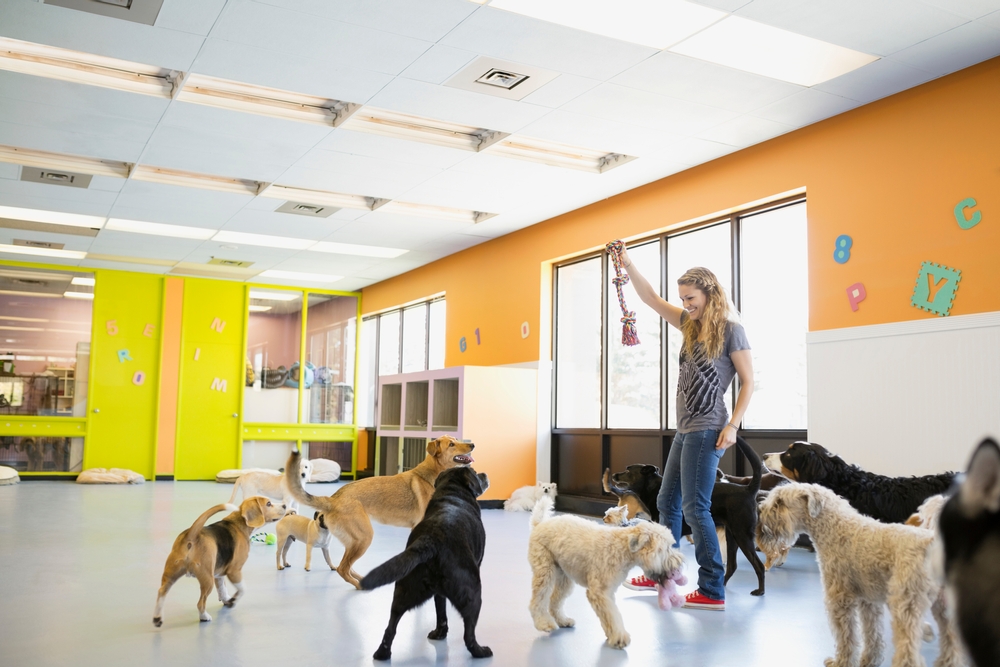
What Can Spread at Daycare, and What Should You Check After Pickup?
Group settings raise the odds of picking up something contagious even with good cleaning and firm vaccine rules, so the best protection is vaccination, steady parasite control, and keeping sick dogs home. Most of what circulates is either preventable or minor, and a quick head-to-tail check after each pickup catches the rest before it grows.
Contagious Illnesses Worth Knowing
Parvovirus survives in the environment for months and spreads through infected stool, which is why an unvaccinated puppy has no business on a shared play floor. Kennel cough travels through the air in close quarters and moves fast through a full daycare, so required vaccination and a firm stay-home-when-sick rule do most of the work of containing it. Canine influenza and leptospirosis surface less often but move the same way, through close contact or contaminated water. If your dog comes home coughing, feverish, or off their food, our in-house diagnostics help us pin down the cause quickly.
Parasites, Skin, and Injuries to Check at Home
Giardia passes easily through contaminated water and shared surfaces and can loosen a dog’s stool within days of a visit, sometimes before any other sign of illness appears. Ringworm is a fungus rather than a worm, spread by direct contact and communal bedding, and it appears as circular patches of hair loss worth a closer look before it reaches the rest of the household. Sudden, intense itching can point to sarcoptic mange, another contagious skin problem that travels quickly in close quarters.
Injuries are usually minor, but they’re easy to miss under a coat of fur. Bite wounds deserve extra attention because a small puncture on the surface can trap bacteria deep under the skin, turning a scratch you almost missed into an abscess days later. Red, squinting, or weepy eyes after rough play also warrant a prompt look, since eye injuries worsen fast. Routine stool checks catch infections even when everything looks normal, and lab testing sorts out the cause when something itchy or loose turns up. For any swelling, tenderness, or discharge from a wound, reach out to us the same day.
How Do You Set Your Dog Up for a Good First Day?
Set your dog up by handling the health and logistics before the trial, so the first visit is only a test of whether they enjoy the group. Gradual introductions, honest information for the staff, and current preventives do far more for a smooth start than anything you can pack in the bag.
Trial Days and Honest Conversations
The best transitions happen gradually, with short trial sessions and calm, unfussy drop-offs; a long, worried goodbye tells your dog there’s something to worry about. Share the real details with the staff, too: medication schedules, anxiety triggers, physical limits, and any behavioral tendencies you’ve seen. A good facility treats that information as a tool for keeping your dog comfortable, never as a reason to judge.
Handling Health and Logistics Ahead of Time
The prep list is short:
| Before the first day | What it covers |
| Book a wellness visit a week or two ahead | Confirms vaccines, updates preventives, and flags anything that should wait. |
| Refresh flea, tick, and heartworm prevention | Keeps a busy yard from becoming a health problem. |
| Bring a recent fecal exam and vaccine records | Most facilities check documentation before a dog walks in. |
| Plan a short first session | A brief trial shows how your dog handles the group without overloading them. |
| Feed a light meal before drop-off | A lighter stomach sits better through hours of active play. |
| Know what a good pickup looks like | Pleasantly tired is the goal; wired or shut down suggests a shorter visit or a rethink. |
Dog Daycare Questions Pet Families Ask Us Most
How Often Is Too Often for Daycare?
It depends on the dog. Plenty do beautifully with two or three days a week, some thrive on daily play, and others are happiest with a single visit and a lot of couch time. The signal to watch is your dog’s recovery: a pup who comes home wired and cranky instead of pleasantly tired, or who starts dragging their feet at drop-off, is telling you the schedule is too much. Full rest days aren’t optional, and it’s fine to dial back and see how they settle.
Are Minor Scratches After Daycare Something to Worry About?
Most surface scratches from ordinary play are minor and clean up at home with gentle soap and water and a day of watching. Punctures are the exception. A bite can look like a pinprick while sealing bacteria under the skin, so call us if a wound swells, feels hot, weeps, or sits close to an eye.
Why Does My Dog Suddenly Not Want to Go Anymore?
A dog who once loved daycare and now plants their feet at the door is telling you something changed. It might be a frightening encounter, a new group that doesn’t suit them, quiet pain from early arthritis or a sore spot, or simply age wearing down their patience for chaos. Start with a checkup to rule out discomfort, then talk with the staff about grouping. Sometimes the honest answer is that a calmer routine fits your dog better now.
Finding the Daycare That Fits Your Dog
The right daycare for the right dog is a real gift: safe play, genuine supervision, sensible vaccine rules, and rest built into the day. The wrong fit creates the very problems you were hoping to solve, which is why the questions come first and the pretty tour comes second. Our part is the health side: updating vaccines, checking temperament and mobility, and preparing the documentation a facility will want. When you’re ready to start touring Cupertino daycares, book a pre-daycare visit with our team at Cupertino Animal Hospital and we’ll have your dog checked, current, and documented before their first day.