Most trail injuries come from ordinary hazards rather than dramatic ones: hot rock and sharp gravel on the paws, foxtails working into ears, paws, and noses, heat, and the occasional snakebite. Bay Area foothill trails bake dry from late spring into fall, and that is the same stretch when grass awns turn sharp and rattlesnakes are most active. The catch is that dogs keep going when they hurt, so trouble that started at mile two often shows up back at the car or that night at home. A scraped pad can usually wait for a weekday appointment, but overheating or a rattlesnake bite is an emergency, so go straight to the nearest 24-hour hospital and call them on the way.
The maddening part of a foxtail is that you usually cannot see it, and that is exactly the problem Cupertino Animal Hospital is set up to solve. Our video otoscopy, endoscopy, and imaging let us look inside an ear canal, a nostril, or an airway, find the awn, and take it out instead of chasing an infection that keeps coming back. Cut pads and torn skin come home from plenty of hikes too, and wound repair and soft tissue surgery are part of what we do here. We are here Monday through Friday, so if your dog is shaking their head, sneezing hard, or favoring a foot after a day out, give us a call.
The Fast Version for a Bay Area Trail Day
- Paws take more damage than anything else on a hiking dog: sun-baked rock, sharp gravel, and barbed seed heads.
- Heat escalates faster than any other trail danger, and dry inland air makes a warm afternoon feel manageable when it isn't.
- Rattlesnakes are out on California foothill trails from spring into fall, and a bite needs a 24-hour hospital right away.
- Limping and head shaking often start the evening after a hike rather than during it.
Which Trail Hazards Send Dogs to Urgent Care?
Post-hike injuries cluster into five groups: burned or cut paws, heat stress, wildlife encounters, plant and insect reactions, and orthopedic damage from a bad landing. Most want same-day attention, and a few are true emergencies.
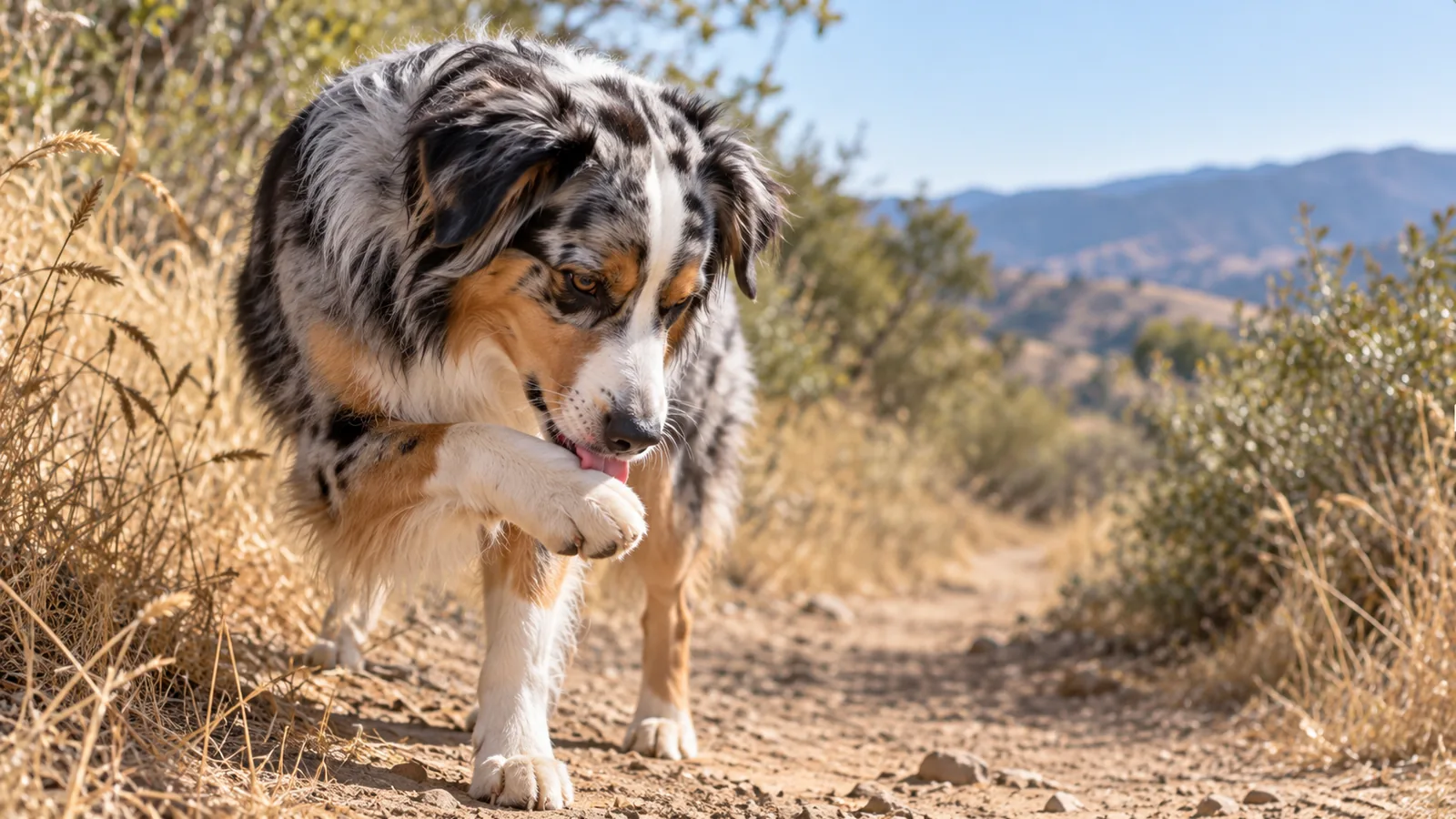
A shortened stride, a lowered head, or a repeated lick at one foot are pet pain signs worth stopping for at the halfway point rather than finding a swollen paw in the driveway.
| Hazard | What it usually causes | What to do out there |
| Sun-baked rock or asphalt | Burned, blistered pads | Cool the feet, carry if you can, exam that day |
| Gravel, granite, broken glass | Pad lacerations | Firm pressure, cover with a sock, exam if it gapes or keeps bleeding |
| Foxtails, burrs, thistle | Embedded material in paws, eyes, ears, nose | Pull what's on the surface, exam for head shaking, sneezing, or swelling |
| Heat and full sun | Heat stress to heatstroke | Shade, cool water, stop the hike, emergency hospital if wobbly or collapsing |
| Rattlesnake | Venomous bite, fast swelling | Carry them out, keep calm, drive to a 24-hour hospital and call ahead |
| Steep descent or boulder jump | Sprain, torn ligament, fracture | Stop, no weight on the leg, stabilize and carry, exam same day |
What Hurts a Dog's Paws on the Trail?
Paws take damage three ways: heat off bare rock, cuts from gravel and granite, and material that burrows inward. Burned pads and deep cuts need to be seen, and embedded material usually comes out under sedation, because it hurts too much to dig at while a dog is awake.
Foxtails are barbed grass awns built to move in one direction only, which is why one that slips between two toes in May can show up as a draining swelling weeks later. Ripgut brome and wild oat awns behave the same way, and the dry slopes at Rancho San Antonio are thick with both from late spring through fall. When something has tunneled past the entry point, endoscopy helps us find it instead of guessing.
How Do You Prepare Paws Before a Hike?
Protecting paws starts at home with trimmed nails, a bare hand held to the rock before you commit, and booties for any stretch thick with dry grass awns. Short nails absorb less force on a descent and are less likely to catch and tear on a root. If you can't hold your palm down for seven seconds, it's too hot for bare pads. Break booties in on neighborhood walks first, or your dog will spend the day shaking a foot.
What Should You Check After the Hike?
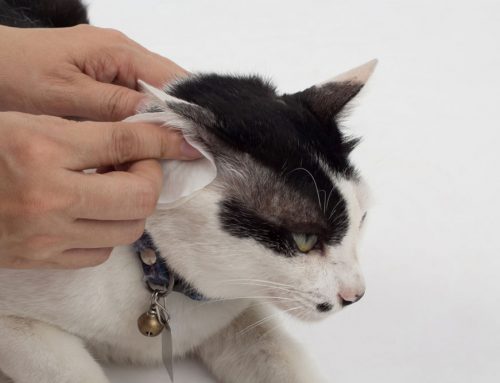
Give the whole dog two minutes at the car, then again after dinner once swelling has developed. Spread the webbing between the toes and look for a red dot, a scab, or a soft swelling, often the only clue an awn went in, then run a thumb over each pad for splits and gravel. Broken nails hide easily in a dusty paw, and one split down into the quick bleeds and gets infected if left alone. Comb the armpits, groin, and ear flaps. Head shaking on the drive home usually means something is down in the canal, which is what our ear care center is built for. Squinting, a watery eye, or hard repeated sneezing points to an awn that found a soft opening.
How Do You Handle a Paw Injury Out There?
A torn nail usually stops bleeding with a few minutes of firm pressure and a pinch of styptic powder. For a pad cut, rinse the dirt out with drinking water, press with gauze until the bleeding slows, then cover it with a sock and tape for the walk out. Pull a thorn or spine only if it's sitting proud of the skin and comes willingly. Cuts that gape, keep bleeding, or go through the thick part of the pad need wound repair, because pads sit under the dog's whole weight and pull themselves back open.
Why Is Heat the Most Dangerous Trail Hazard?
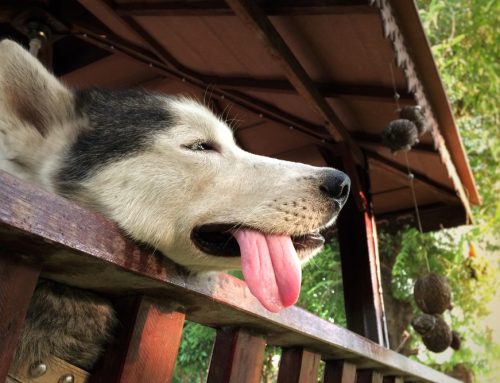
Heat escalates faster than anything else out there, and panting is most of what a dog has to cool with. Heat safety on a summer hike comes down to starting at dawn, carrying more water than you think the two of you need, and turning back at the first hard panting, wide flat tongue, or lag on the leash. Inland California heat is dry, so a 90-degree canyon feels manageable to a hiker in a hat while the dog four feet below absorbs radiant heat off the rock.
If your dog is already overheating, get them into shade and pour cool tap water over the belly, armpits, and groin, then move air across the wet coat. Never use ice water or an ice bath, which clamps down surface blood vessels and traps heat inside. Drive to an emergency hospital even if they seem better, because the internal damage keeps unfolding for hours. Flat-faced breeds like Bulldogs and Pugs, seniors, overweight dogs, and any dog with heart or airway disease cross the line much sooner, and a wellness exam before trail season will tell you where your dog falls.
What Should You Do About Rattlesnakes and Other Wildlife?
Foothill trails hold more wildlife than most hikers notice, and the risk depends on how close your dog gets. A short leash is the best defense in California wildlife encounters, since a loose dog that charges a coyote or a coiled rattlesnake brings it straight back to you.
- Rattlesnakes: A bite is time-critical, so carry your dog if you can, keep them quiet, and drive to the nearest 24-hour emergency hospital while someone calls ahead. Don't apply a tourniquet, cut the site, or ice it, and don't wait for morning, since antivenom is given at emergency hospitals that stock it.
- Coyotes, bears, raccoons, wild pigs, mountain lions, skunks, and bats: Pick up a small dog, stand tall, make noise, and back away slowly instead of running. Skunk spray in the eyes or mouth causes drooling and vomiting, and any bite or scratch from wildlife, including a bat or raccoon, means a same-day visit and a rabies booster.
- Puncture wounds: Tooth punctures look tiny and go deep, sealing bacteria under the skin where an abscess builds over the next few days. Deep bites often need surgical cleaning and closure rather than an antibiotic alone.
Which Plants and Insects Cause Trouble on California Trails?
Plants that blister skin or poison a dog who chews them, and the insects and arachnids that bite or sting, fill appointment slots every summer. The ones that turn serious usually involve a mouthful of something unknown or a swarm.
Toxic and Irritating Plants
Hemlock, jimson weed, and wild mushrooms all land on the list of toxic plants, and a photo plus a bagged sample makes identification far faster. Bathe after a brushy hike. Stinging nettles along creek bottoms cause drooling and face-pawing that eases within a few hours, and death cap mushrooms come up under coast live oaks after the first rains. If your dog swallows something you can't name, call the ASPCA Animal Poison Control Center at 888-426-4435 and bring the sample with you.
Insects, Spiders, and Ticks
- Spiders: Black widows shelter in rock piles and trail debris, and a bite from one of California's venomous spiders can bring muscle rigidity, tremors, and pain that outlasts any visible swelling.
- Bees, wasps, and yellowjackets: A sting or two on the muzzle swells and settles, but a dog who digs into a ground nest can take dozens of stings at once, and that many is an emergency. Skip any human combination antihistamine, since the added decongestants and pain relievers are the dangerous part.
- Ticks: They favor ear flaps, the neck, and the webbing between toes. Pull one with fine tweezers close to the skin, and keep year-round prevention current rather than relying on tick checks alone.
How Do Trail Tumbles Cause Orthopedic Injuries?
Steep descents, loose scree, and leaps off boulders are where orthopedic injuries happen, because the landing loads one leg at an angle it wasn't braced for.
- Strains and sprains: A mild limp that loosens up over a day or two of short leash walks is usually soft tissue. One still there at 48 hours, or with swelling and heat, needs an exam.
- Ligament tears: A dog that yelps on a steep descent and then toe-touches on that back leg is showing the classic pattern of a cruciate ligament injury, which almost never resolves with a weekend of rest.
- Fractures: A leg held at an odd angle or refusing any weight at all points to broken bone. Don't splint it on the trail, since a poorly placed splint moves the break. Support the leg against the body, use a jacket as a stretcher, and carry them out.
Digital radiography settles whether it's a fracture, a joint problem, or soft tissue in the same visit. Our in-house CT adds spine and skull detail that plain films blur. A repair like a TPLO or a fracture plate goes to a board-certified surgeon, and we arrange the referral and handle recheck care afterward. Leave the ibuprofen, naproxen, and acetaminophen in your own cabinet while you wait.
What Water Hazards Should You Watch For?
Water hazards show up on any trail that ends at a reservoir like Stevens Creek. Water safety there means a life jacket for a weak swimmer, water from your own bottle instead of the stagnant edges, and a towel through the ears before the drive home. Standing water is where dogs pick up Giardia and leptospirosis, so ask whether the lepto vaccine fits your dog's schedule.
- Toxic algae: Warm, still water with a blue-green paint slick or shoreline scum is the classic look, though it isn't always visible, and a few mouthfuls can kill within hours. Check the current state advisory list before a water outing.
- Moving water: Spring runoff carries far more force than it looks like from the bank, and a strong swimmer can be swept past the exit point. Keep the leash on near fast water.
- Submerged hazards: Dogs launch in without checking depth, and rocks, branches, and glass under the surface cause deep cuts and neck injuries. Wade in first on anything unfamiliar.
How Do You Lower the Odds Before You Go?
Planning around your dog's fitness rather than your own prevents most of what we see.
| Category | What to sort out first |
| Gear | Booties, a life jacket for water days, a collapsible bowl, extra water, fine tweezers, gauze, self-adhering wrap, clotting powder, and a way to carry your dog out |
| Prep | Build mileage gradually, check the forecast and ground temperature, keep vaccines and prevention current, and look up the nearest 24-hour hospital on your route |
| Skills | A recall that holds around wildlife, a solid "leave it," leash discipline in brush, reading early heat signs, and a lift-and-carry practiced at home |
Leash laws change from trail to trail, so read the rules before you load the car. Ahead of trail season, current parasite prevention and an up-to-date rabies vaccine take the two most common post-hike complications off the table.
When Should Your Dog Come In After a Hike?
Most trail injuries land in the middle: a deep pad cut, a migrating foxtail, a limp that hasn't improved by morning, or a dog who overheated and still seems off. Those want an appointment, not a wait-and-see week. A rattlesnake bite, major trauma, collapse, heatstroke, or a swallowed toxin means driving to the nearest 24-hour veterinary emergency hospital right then. We're open Monday through Friday, so call ahead and we'll have the right room and equipment ready; outside our hours, call the closest emergency hospital directly and we'll pick up the follow-up care once you're both home.
Questions We Hear After a Day on the Trail
How hot is too hot to hike with a dog?
There's no single cutoff, but trouble starts for most dogs above the mid-70s with full sun and no shade. Ground temperature matters more than air temperature. A flat-faced, senior, or overweight dog hits their limit ten to fifteen degrees earlier than a fit young shepherd. When in doubt, hike at dawn or after sunset.
My dog is limping the morning after a hike. Is that worth a visit?
Check the paw first, since a split nail or a pebble wedged in the webbing explains a surprising number of morning limps. Come see us if the limp is still there at 48 hours, if the leg won't take weight, if there's swelling or heat around a joint, or if it started with a yelp. Human painkillers are not safe for dogs.
What should I do if I think a rattlesnake bit my dog?
Carry your dog if you can lift them, keep them still, and drive to the nearest 24-hour emergency hospital with someone calling on the way so the staff can prepare. Don't use a tourniquet, cut the wound, or apply ice. Swelling, pain, drooling, and weakness build quickly. If your dog has had the rattlesnake vaccine, go anyway: it may soften the reaction but doesn't replace treatment.
Building Trail Safety Into Every Hike
A good trail day comes down to the unglamorous parts: trimmed nails, an early start, extra water, a short leash through brush, and two quiet minutes checking your dog over at the car. Most trail injuries never have to happen, and the ones that do go better when you come in early.
If something seems off that evening, a favored foot or a head that keeps shaking, reach out to us here in Cupertino and we'll sort out whether it's a today problem or a this-week problem.