The ear cleaner sitting in your online cart is not necessarily safe for your dog or cat, because over-the-counter ear products vary widely in pH, ingredients, and whether they belong anywhere near a damaged or infected ear canal. Some are gentle maintenance rinses for healthy ears, others contain alcohol or vinegar that burn inflamed tissue, and a few include ingredients that can damage the middle ear if the eardrum is ruptured. The bottle rarely tells you which category it falls into, and the wrong choice on an already irritated ear can drive a small problem into a chronic one. Knowing what is in the bottle, and whether the ear in front of you is healthy enough for it, is the part most labels skip.
Cupertino Animal Hospital runs a dedicated Pet Ear Care Center with video otoscopy and endoscopic ear evaluation that lets us see deep into the canal, check the eardrum, and identify what is actually driving the irritation before any product touches the ear. That matters because the dogs and cats we see with worsening ear problems often arrive after weeks of home cleaning with a product that was wrong for their specific issue. We work with you to match the cleaner, the medication, and the cleaning rhythm to what your pet’s ears actually need, rather than the marketing claims from the bottle on the shelf. If your pet is shaking their head, scratching at an ear, or you want a second look before you trust the bottle, request an appointment and we will take a closer look.
The Short Version on Ear Cleaners
- The wrong cleaner or over-cleaning a healthy ear can create the very irritation you were trying to avoid.
- Not every over-the-counter cleaner is safe, since alcohol, vinegar, hydrogen peroxide, and essential oils can burn inflamed tissue, and some ingredients cause lasting damage when the eardrum is ruptured.
- Certain situations, like pain, swelling, heavy discharge, or a sudden head tilt, mean it is time to stop cleaning and have the ear looked at instead.
- The right cleaner depends on what is actually in the ear, which is why a look deep in the canal and a swab under the microscope beat guessing off a label.
Why Do Routine Ear Checks Actually Matter?
Routine ear checks turn a hidden, fast-moving problem into one you can catch on day one instead of day ten. They are low-stress, take under a minute, and slot easily into the petting you already do, especially once they become a regular part of your pet’s routine.
Most dogs and cats tolerate a gentle ear check without much fuss, and the ones who do not usually just need the experience made pleasant. Pairing gentle ear handling with treats and short, upbeat sessions is the heart of cooperative care, which turns a weekly check into something most pets accept willingly rather than tolerate. Start young if you can, keep sessions brief, and end on a good note.
What Makes Dog and Cat Ears So Prone to Problems?
The ear canal in dogs and cats takes an L-shaped turn on its way to the eardrum, running downward and then inward. That bend traps moisture, wax, and debris in a warm, dark, poorly ventilated space, which happens to be exactly where yeast and bacteria love to multiply. It is a beautifully designed canal for protecting the eardrum and a frustrating one for staying dry and clean.
On top of that basic anatomy, some pets are simply built for more trouble than others:
- Floppy-eared breeds: A heavy ear flap lying over the canal cuts down airflow and keeps things humid inside, which is why spaniels, retrievers, and hounds show up so often with ear issues.
- Hairy canals: Breeds with hair growing inside the ear canal, like poodles and many doodles, trap moisture and debris more easily.
- Narrow canals: Some pets have naturally tight canals that hold onto wax instead of letting it work its way out.
- Medically prone pets: Breeds prone to allergies or hormonal disease are especially vulnerable, because inflammation or skin dysfunction is one of the biggest hidden drivers behind itchy ear problems that keep coming back no matter how often the ear is wiped clean.
Pets with ears built for trouble may need a check every two or three days instead of every week. Because so much of this comes down to your individual pet’s build, we tailor ear care to your pet’s breed and anatomy rather than handing every family the same generic advice.
What Are the Warning Signs That Your Pet’s Ears Need a Vet?
Call the vet when you see frequent head shaking or tilting, scratching and pawing at the ears, redness, swelling, or warmth, discharge that looks brown, yellow, or bloody, a strong or sour smell, or a yelp when you touch the ear. Don’t clean the ears. Come in for an appointment. Any one of these means your pet is asking for help.
Watch, too, for rubbing the side of the head along the couch or carpet. Redness, warmth, discharge, and a sour smell are the classic warning signs of otitis externa (outer ear infection) and catching them at the first head shake keeps a minor irritation from turning into a stubborn infection. An ear caught early often needs a simple, short course of treatment, while one brewing for weeks can mean a swollen, painful canal that is far harder to clear. If you spot any of these, reach out for a same-day appointment rather than waiting to see if it settles on its own.
How Often Should You Inspect and Clean Your Pet’s Ears?
The honest answer is that inspection and cleaning are two different things on two different schedules. Nearly every pet benefits from a weekly look (or more), but healthy ears often need very little actual cleaning, and cleaning too much can cause more harm than skipping it. The right frequency depends on your pet’s anatomy, lifestyle, and history.
Weekly Inspections and a Cleaning Schedule Built for Your Pet
Scanning for any change in color, odor, moisture, or debris every few days or once a week should be standard for every dog or cat. Here is the part that surprises a lot of families: if everything looks and smells normal, there is usually no need to clean at all unless your veterinarian has told you otherwise. For most healthy pets, a gentle clean every few weeks, or after a swim or bath, is plenty. Dogs who swim often or live with medical conditions that make them prone to ear inflammation may need more. Over-cleaning, on the other hand, can dry out the canal, strip the protective wax layer, and cause the exact irritation you were trying to prevent. We help families build a personalized cleaning schedule based on your pet’s history, lifestyle, and anatomy rather than a one-size-fits-all rule.
Which Pets Need Extra Monitoring?
Some pets simply need a closer eye: those with seasonal allergies, endocrine diseases, breeds with heavy ear flaps, dogs who swim regularly, and any pet with a past ear infection. Once a pet has had one ear infection, recurring ear infections become far more likely, which is why these higher-risk pets deserve a plan aimed at the root cause. For them, a care plan built around their individual medical background is what keeps a recurring problem from becoming a chronic one. When infections keep circling back, diagnostic imaging and testing help us catch them early and find what is actually driving them.
When Should You NOT Clean Your Pet’s Ears at Home?
There are times when reaching for the cleaner is the wrong move, and cleaning anyway can make everything worse. Skip home cleaning and call us if you see signs of active infection, like swelling, redness, warmth, or foul-smelling discharge, along with obvious pain or sensitivity, any bleeding or crusting, or a sudden behavior change such as disorientation or a head tilt.
Knowing when not to clean ears matters just as much as knowing how, because flushing an ear that is swollen, painful, or bleeding can drive infection deeper. The bigger danger sits behind the eardrum. A sudden head tilt, disorientation, or loss of balance can signal otitis media and interna, and pouring cleaner into an ear behind a possibly ruptured eardrum can permanently damage hearing and balance. When any of these show up, the safest step is a proper ear evaluation with us before anything goes into the canal.
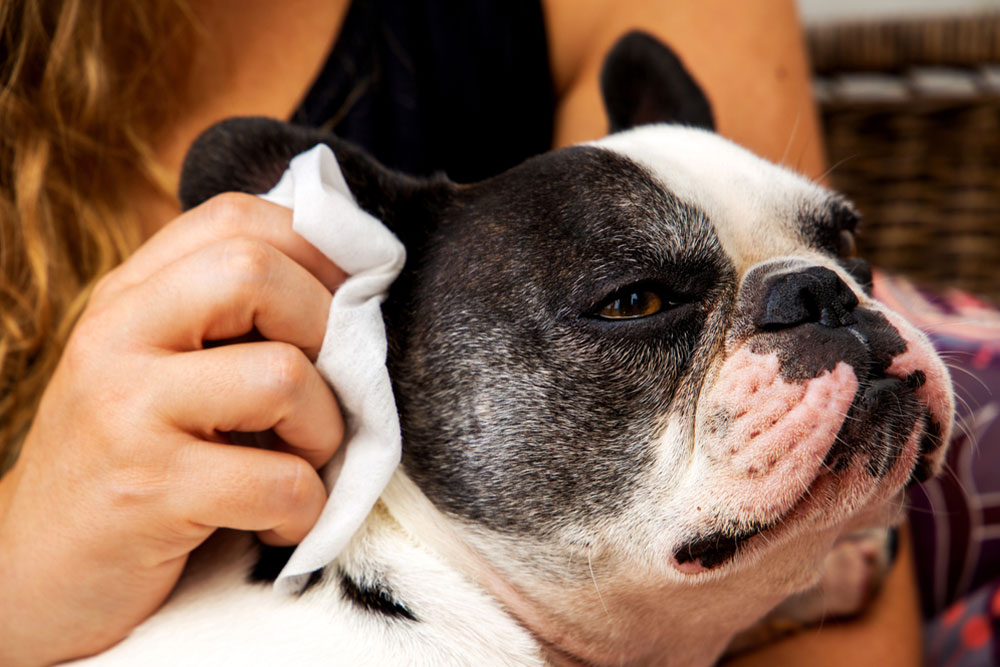
What Does Safe, Gentle Ear Cleaning Actually Look Like?
When your veterinarian has given the green light, safe cleaning is calm, quick, and surface-level, never a deep excavation. Set up somewhere quiet, keep treats close so your pet associates the whole thing with good stuff, and stop the moment they resist or seem uncomfortable. The goal is a positive experience, not a perfectly spotless canal.
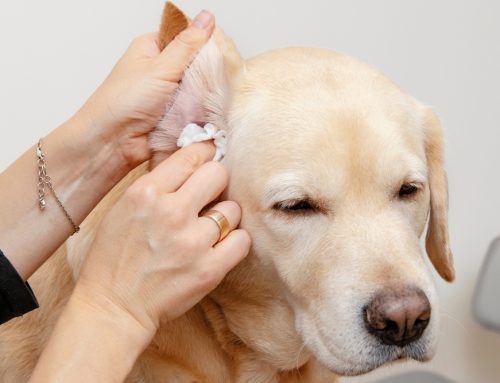
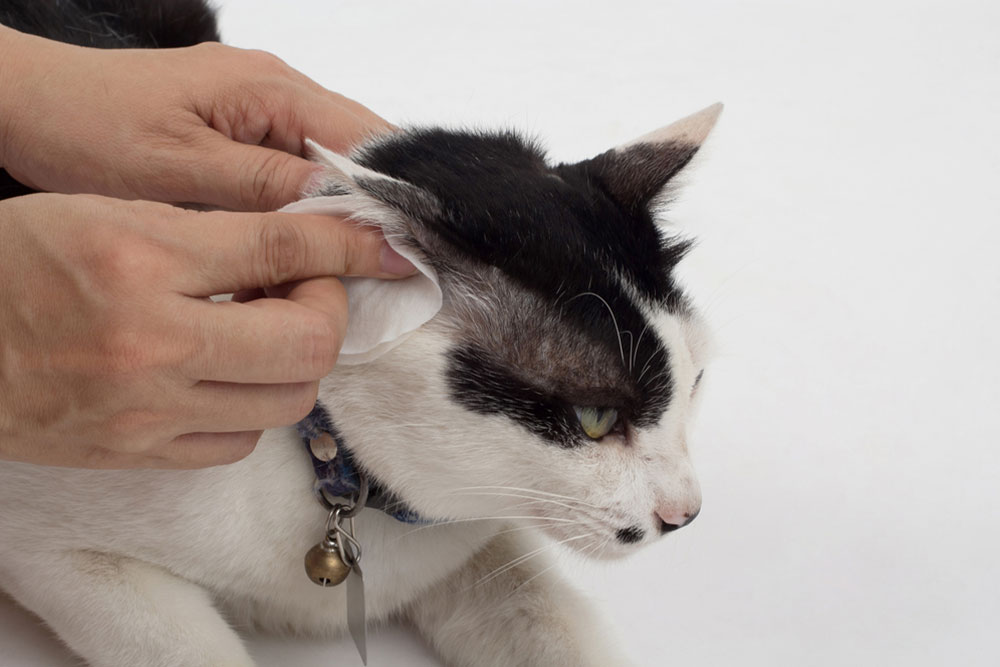
For a dog, fill the canal with an approved solution, massage the base of the ear, let your dog shake, and wipe away what surfaces with a cotton ball, never pushing a swab down into the canal. That massage loosens debris, and the head shake does most of the work of bringing it up where you can wipe it away. Cats are a different story. Cleaning your cat’s ears calls for a far lighter touch and much less frequency, since healthy feline ears are largely self-maintaining. One firm rule for both species: cotton swabs never go into the canal, since they pack debris deeper and can injure the eardrum. If you would rather see it done first, we can demonstrate proper cleaning technique in person during a visit.
How Do You Keep Water and Moisture From Causing Ear Trouble?
Moisture is the fuel behind most ear infections, because water trapped in that L-shaped canal turns it into an ideal breeding ground for bacteria and yeast. The fix is refreshingly simple: get the ears dry, and do it promptly.
A few habits go a long way: dry the ears every time your pet gets wet, use a veterinary drying solution for frequent swimmers, consider protective gear for the truly water-obsessed, and give the canal a chance to air out.
Why Aren’t All Ear Cleaners Safe or Effective?
Ear cleaners are not interchangeable, and the label rarely tells you which ones will soothe an ear and which will set it on fire. The difference comes down to what is inside and whether it matches the ear you are treating.
The Trouble With Over-the-Counter Cleaners
Plenty of drugstore and online cleaners contain harsh ingredients that sting inflamed tissue, cause chemical burns, or are outright toxic to pets. The usual offenders are worth knowing by name:
| Ingredient to avoid | Why it is a problem |
| Alcohol | Stings and dries out already inflamed tissue, making irritation worse |
| Hydrogen peroxide | Irritates the delicate canal lining and can damage healthy tissue |
| Vinegar | Acidic and painful on any ear that is already raw or broken |
| Essential oils | Marketed as “natural” but can be toxic and irritating to dogs and cats |
| Ear mite treatments | Brown debris in an ear is rarely ear mites, and the ingredients are harsh and irritating |
Here is the part that catches families off guard: a “natural” label does not mean safe. Many products marketed for pets still contain problematic ingredients behind pleasant packaging. And with a ruptured eardrum, an unsafe cleaner can cause permanent damage or even deafness. Human ear products are never appropriate for pets, full stop.
How to Choose a Safe, Veterinary-Approved Cleaner
Safe cleaners are pH-balanced for the ear and use gentle surfactants or drying agents that lift debris without burning tissue. The catch is that the right choice depends on the specific ear, whether that pet is dealing with allergies, an active infection, or canal damage. Choosing the right cleaner is not guesswork but a decision guided by ear cytology, where a swab viewed under the microscope shows whether yeast, bacteria, or both are behind the problem and which product will actually help. Once we know what we are dealing with, we can recommend veterinary-approved cleaners that suit your pet instead of leaving you to gamble on a shelf.
Frequently Asked Questions About Pet Ear Care
How do I know if I’m cleaning my pet’s ears too often?
Signs of over-cleaning include a dry, red, or irritated canal, and a pet who suddenly seems more bothered by their ears after cleaning than before. Healthy ears with no odor, discharge, or debris usually do not need routine cleaning at all, so when in doubt, less is often more.
If you find yourself cleaning weekly out of habit and the ears look fine, ease off and let us set a schedule that fits your pet.
Is it okay to use the same cleaner on my dog and my cat?
Not necessarily. Cats have more delicate ears, need cleaning far less often, and can react badly to products formulated for dogs. Some ingredients that are fine for a dog can irritate or even harm a cat. Before sharing a bottle between pets, check with us so we can confirm the product is safe for each animal.
When should I stop cleaning and just call the vet?
If your pet flinches when you touch the ear, shows a new head tilt, or has heavy discharge, those are signs an ear needs a vet, not a cleaner, and pushing forward with home cleaning can make things worse. Pain, a foul smell, bleeding, crusting, or any sudden change in balance or behavior all mean it is time to book an exam instead of reaching for the bottle. Cleaning an ear in that state can drive the problem deeper.
Your Partner in Keeping Those Ears Healthy
Good ear health is really three things working together: a quick weekly look at home, cleaning only when your pet actually needs it, and professional eyes on anything that seems off. Ear care can feel overwhelming, especially when infections keep coming back and nothing seems to stick, but you do not have to sort it out alone.
With the right guidance, most ear problems become manageable and many become preventable. If your pet is shaking their head, you are unsure which cleaner is safe, or you simply want a baseline for those ears, schedule a wellness visit or ear care consultation and we will build a plan around your pet.